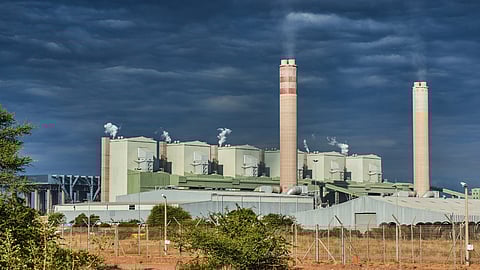
Key topics:Eskom rejects FGD retrofit costsWorld Bank loan terms at riskMedupi power plant faces delay.Sign up for your early morning brew of the BizNews Insider to keep you up to speed with the content that matters. The newsletter will land in your inbox at 5:30am weekdays. Register here.Support South Africa’s bastion of independent journalism, offering balanced insights on investments, business, and the political economy, by joining BizNews Premium. Register here.If you prefer WhatsApp for updates, sign up to the BizNews channel here..By Antony Sguazzin.Eskom Holdings SOC Ltd., the world’s biggest emitter of the toxin sulfur dioxide, presented a study that argues against the cost of installing equipment to limit emissions, risking a breach of a World Bank loan agreement and riling environmental activists. The South African utility said the cost of retrofitting so-called wet flue-gas desulfurization, or FGD, units at its Medupi power plant would amount to 383 billion rand ($24 billion) in installation and running costs. By comparison an offset program to supply local communities with clean cooking equipment to replace the use of coal would be 5.1 billion rand, it said. In 2010, Eskom borrowed $3.75 billion from the World Bank to complete the plant in South Africa — one of the world’s largest coal-fired power facilities — on condition that it install pollution-abatement equipment. In 2021, the utility said it had agreed with the lender to delay the installation to June 2027 from the original 2025 deadline.“The monetized health-benefit value of the reduction in sulfur-dioxide emissions is substantially less than the capital and operating expenditure for FGD,” Eskom said in the study released late Tuesday. Health benefits are “orders of magnitude less than the cost of implementing wet FGD at Medupi,” it said. .The World Bank and Eskom didn’t immediately respond to queries. The study is now open for public comment.Sulfur-dioxide pollution causes respiratory illnesses and acid rain. Eskom has said that in addition to being expensive, the FGD equipment would increase water consumption, necessitate the use of large quantities of limestone and produce additional carbon dioxide, a greenhouse gas. “They’ve carefully excluded all significant population centers from the study,” Lauri Myllyvirta, lead analyst at the Helsinki-based Centre For Research on Energy and Clean Air, said by text message. “The benefit of FGD is grossly underestimated.”Eskom said the suggested offset program would produce significant benefits.Clean cooking “delivers pronounced health benefits by reducing household air pollution,” Eskom said. “Estimated health benefits significantly exceed implementation costs by more than 30 times.”.© 2026 Bloomberg L.P.