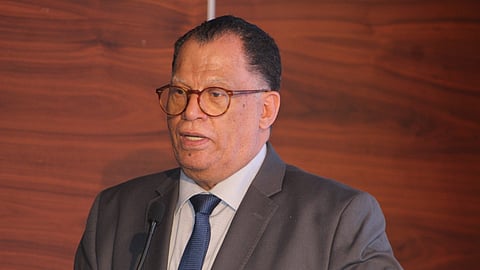
Key topics: SAFA reports R5m deficit amid soaring salaries, bonusesRadebe says it’s “long overdue” for Jordaan to goLiabilities outpace revenue growth despite major FIFA, CAF funding.Sign up for your early morning brew of the BizNews Insider to keep you up to speed with the content that matters. The newsletter will land in your inbox at 5:30am weekdays. Register here.Support South Africa’s bastion of independent journalism, offering balanced insights on investments, business, and the political economy, by joining BizNews Premium. Register here.If you prefer WhatsApp for updates, sign up to the BizNews channel here.The auditorium doors will open for BNIC#2 on 10 September 2025 in Hermanus. For more information and tickets, click here..By Kerry Lanaghan.According to a report made by the Sowetan, the South African Football Association (SAFA) is heading into its long-awaited ordinary congress this weekend burdened by a R5-million deficit and growing concerns over financial mismanagement. According to a financial report compiled by SAFA’s committee chairperson, Mxolisi Sibam, the association’s economic health is deteriorating, with tight liquidity and potential solvency risks on the horizon.The report, which covers the financial year ending June 2024, attributes the bulk of SAFA’s financial woes to ballooning staff salaries and hefty performance bonuses paid to national teams. “The largest expenditure item was the R150 million (or 40% of revenue) paid in performance bonuses to players and technical staff,” the report notes.SAFA’s total turnover increased to R386 million in 2024, up from R239 million the previous year, buoyed mainly by R160 million in participation fees from FIFA and CAF for Bafana Bafana and Banyana Banyana’s appearances in the Africa Cup of Nations and the Women’s World Cup, respectively. However, the association’s soaring expenditures have outpaced income, pushing it into the red.Adding to the financial strain is what the report describes as "relatively high" salaries and remuneration when benchmarked against comparable football associations globally. Despite the finance committee flagging this as an unsustainable area that “requires review,” the report remains notably silent on the size and cost of SAFA’s bloated national executive committee - a structure that FIFA recommended be downsized over a decade ago.Sibam’s report reveals some marginal positives: SAFA’s assets grew by 17% to R193 million. However, this was offset by a sharp rise in liabilities, which increased from R172 million in 2023 to R207 million this year. More alarmingly, current liabilities - obligations due within a year - rose to R197 million, putting further strain on the organisation’s tight liquidity.The financial findings land at a politically sensitive moment. Two weeks ago, SAFA leadership faced intense scrutiny in Parliament over governance issues. Calls for change are growing louder, especially regarding the long-serving president, Danny Jordaan. Former Bafana Bafana captain Lucas Radebe has publicly stated that Jordaan should not seek another term.“He shouldn’t even be there at this stage; it’s long overdue that he leaves,” Radebe told the Sowetan. “We are performing on the field but are lacking in the office. We know exactly where change is needed.”Radebe’s comments come after South Africa’s youth national teams delivered promising performances, including the Under-20s’ historic win at the Junior Africa Cup of Nations. However, critics argue that on-field success is being overshadowed by boardroom dysfunction.As Safa prepares for Saturday’s congress, the central question remains whether the organisation will take meaningful steps to address financial instability and governance reform, or continue down a path of unsustainable operations and internal inertia.