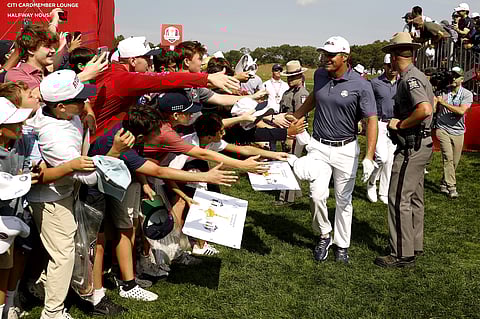
Key topics:Ryder Cup fans likely to cheer, boo, and break golf etiquette.Younger, social-focused fans driving golf’s growing popularity.Off-course and informal play formats, like Topgolf, surge 173%..Sign up for your early morning brew of the BizNews Insider to keep you up to speed with the content that matters. The newsletter will land in your inbox at 5:30am weekdays. Register here.Support South Africa’s bastion of independent journalism, offering balanced insights on investments, business, and the political economy, by joining BizNews Premium. Register here.If you prefer WhatsApp for updates, sign up to the BizNews channel here..By Adam Minter.Early Friday morning, American and European teams will tee off at the 2025 Ryder Cup in New York. If history is any guide, the spectators will soon abandon traditional, reserved golf etiquette and start behaving like they’re at a college football game. “Golf claps,” the polite, often lampooned tapping of the hands seen at some tournaments, are likely to be drowned out by cheers, boos and heckling.Some of the behaviour goes with the territory; the biennial Ryder Cup always inspires unusual expressions of nationalist emotion. But much of the noise is expected to be new because of a wave of younger fans who are re-energising golf after years of stagnating interest.Coverage of this year’s Ryder Cup has raised several questions about whether the rowdiness will ruin the matches. There’s no defending truly boorish or abusive behaviour — no sport should tolerate that. But growth depends on keeping the game fun, and a little rowdiness in golf’s galleries may be exactly what the sport needs. .Read more:.The Economist: What this year’s Ryder Cup says about America’s duffers.That’s not how golf has traditionally viewed spectator behavior. Instead, the game at all levels has demanded decorum and reserve. Respecting competitors by not overly celebrating made shots, for example, is a common and admirable written (and unwritten) rule. But a heavy emphasis on etiquette can also be off-putting, subtly signaling who is and isn’t welcome at courses.The PGA Tour — organiser of most professional golf tournaments in North America and the chief steward of the game’s refined image — doesn’t always seem to mind signals that are exclusionary. It’s long leaned on luxury sponsors who both reinforce and profit from golf’s elite image. Tournament broadcasts highlight this branding, with most showcasing stroke play on full-length courses, which is a format that requires considerable time and financial resources to play.This approach to presenting the sport works well for maintaining an aging, affluent audience. But it’s a poor way to attract younger fans. That’s why golf's image was producing diminishing returns by the early 2010s.The numbers tell the tale. In 2013, research by the National Golf Foundation, a trade association, found that 57% of Americans held a negative image of golf, labelling it “boring,” “pretentious” and “stale,” among other unflattering descriptors. No surprise, participation cratered, especially among younger Americans. Between the mid-1990 and mid-2010s, players aged 18-34 declined 30%.The good news for golf, if there was any, is that nearly half of Americans still held a positive view of the sport. And why not? Despite rarely getting mass market attention, many amateurs enjoy golf as a raucous social event.Visit any public course — such as BethpageBlack, where this week’s Ryder Cup is being played — and you’ll find groups of friends having a good time playing for low or no stakes. The vibe is often rollicking and rambunctious; razzing is part of the fun. Depending on the group (and, let’s be honest, how much alcohol has been consumed) these games seem more inspired by films like Caddyshack and Happy Gilmore than by the traditions of the Masters.It remains bewildering (to me, at least) why the PGA and other golf organizers and media rights holders didn’t adapt the sport to reflect this more informal and social game a long time ago. Instead, golf’s renaissance was spurred, in large part, by two off-course phenomena.The first is YouTube. The platform has always been a favorite place for pros to post on-demand instructional videos. But during the 2010s, it also became a portal for posting golf entertainment ranging from trick shots to playing drunken rounds. Since then, YouTube golf has become an everyday alternative to the staid, whispered golf tournaments broadcast and streamed by networks. The most popular channels have millions of viewers, and serve as a welcoming, social gateway for people who might otherwise be alienated by the sport’s elite and inaccessible culture and branding.The second factor is the rise of golf-related activities. For example, indoor entertainment complexes like Topgolf present simulator games in a relatively affordable and informal atmosphere. Friends play over food, drinks and wagers. Team games — rather than individual ones — amp up the camaraderie. Based on my handful of visits, friendly trash talk is allowed (and common)..Read more:.Why the ‘superior’ US team only won 36% of Ryder Cup matches since 1995.Data from the National Golf Foundation help put how these trends are altering golf into perspective. Between 2015 and 2024, participation in all forms of golf, on-course to off-course, grew 52%. But off-course was the real story: it grew 173% during that period (on-course grew a mere 17%). More people still play on-course — 28.1 million versus 19.1 million off-course — but if current trends hold, those numbers will soon flip. NGF’s research also shows a younger shift in the game: golfers under 50 accounted for 71% of all rounds played since the Covid pandemic.Traditionalists who lament the sport’s drift from its conservative roots may frown at what’s driving these numbers. But the alternative — the slow death of golf — would have been a far harsher outcome. Survival has meant change, and the game is thriving because of it..© 2025 Bloomberg L.P.