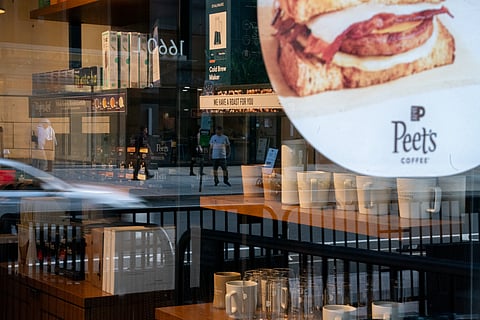
Key topics:M&A boom driven by FOMO often hurts shareholder valueBig consumer deals trigger debt, risk, and falling share pricesInvestors wary of scale bets, strategy shifts, and tough integrations.Sign up for your early morning brew of the BizNews Insider to keep you up to speed with the content that matters. The newsletter will land in your inbox every morning on weekdays. Register here.Support South Africa's bastion of independent journalism, offering balanced insights on investments, business, and the political economy, by joining BizNews Premium. Register here.If you prefer WhatsApp for updates, sign up to the BizNews channel here..By Chris Hughes.Everyone else is doing mergers and acquisitions so why shouldn’t I? The simple answer to a corporate boss with FOMO is that M&A can seriously harm your share price.Data showing a strong first quarter for dealmaking may fuel a sense that companies risk being left behind if they sit pat. Sometimes what they are missing out on is a stubborn drop in their market capitalization. Just look at the big consumer-industry deals that have landed over the last eight months.Keurig Dr Pepper Inc.’s August agreement to buy JDE Peet’s NV at a $23 billion enterprise value vastly expands the buyer’s existing coffee business so it can then be spun off as as a large, global company and leave behind a soft-drinks firm with brands such as Snapple. On paper, the idea has strategic logic: The separate lines of business gain focus and, in coffee, scale. That ought to drive organic growth — the holy grail for all chief executive officers..Read more:.Gold Fields strikes $2.4bn deal for Australian rival Gold Road amid mining M&A boom.But investors have recoiled because Peet’s has a poor track record and the all-cash deal pushes KDP’s debt up sharply, even after enlisting private-capital giants Apollo Global Management Inc. and KKR & Co. as equity partners. The share price is far below where it was pre-deal..Elsewhere, Kimberly-Clark Corp.’s $49 billion acquisition of Kenvue Inc. takes the diaper-maker into consumer health, an area that’s related to its core personal-hygiene business though which is nevertheless a strategic departure. That might not matter so much if Kenvue were fighting fit. But it’s in turnround mode and brings a history of litigation. It’s also embroiled in a row with US President Donald Trump over the safety of Tylenol (though health bodies continue to endorse the painkiller).Kimberly-Clark’s debt will go up in the short term, even though paying mainly in stock will keep that in check. Once more, the market is unimpressed. The shares are down about 20% since just before the deal was announced.Recent deals — such as Sysco Corp.’s March agreement to pay $29 billion for billionaire-owned Jetro Restaurant Depot — have fared less badly, though they haven’t wowed shareholders either. Sysco is a distributor to the eating-out industry, and the deal takes it into cash-and-carry in the same sector. Restaurant Depot has been increasing revenue slightly faster than Sysco and analysts at Barclays Plc reckon it could be a “feeder” for the buyer’s existing business. The acquisition will be run as a “standalone” division and keep most of its existing management.It’s a marked strategic departure all the same. Bringing together different types of business means the opportunity to cut costs is modest relative to the size of the combination. The buyer’s debt goes up. The shares have fallen nearly 10% in the deal’s wake.Finally, there’s McCormick & Co.’s combination with Unilever Plc’s food business, valuing the latter at $45 billion, more than twice the size of the US suitor. The strategic logic stacks up on paper, creating value “through greater depth in a single category, flavorings, rather than diversification,” as analysts at TD Cowen put it. The terms value the two businesses more or less equally and the deal generates chunky cost savings.Sure, McCormick’s debt increases thanks to paying Unilever $16 billion while leaving its new partner and its shareholders with 65% of the enlarged business. But the alternative — paying less cash and giving away an even bigger share of the combination — would have left McCormick investors with less upside.Again, the market is nervous, with the shares down nearly 5% since the deal announcement. A valid worry is the sheer size of the integration job needed. McCormick has a good record in digesting deals, but more with bite-sized transactions. It’s reassuring that Unilever teams will be part of the process, but the lopsided deal opens the possibility of a culture clash.McCormick’s falling stock price hurts Unilever’s too, given that the UK company is taking most of the payment in the buyer’s shares. But finding a better path for Unilever Foods isn’t easy.A presumption that consumer-industry deals destroy value is justified by history. A textbook modern example is the disastrous 2015 combination of Kraft Foods Group Inc. and HJ Heinz Co. Legendary investor Warren Buffett backed the tie-up and later renounced it. Yet the urge to reconfigure portfolios of brands to try to achieve stronger growth isn’t going away, and deals can beget deals as rivals worry that they’ll be less competitive than merged peers.Dealmaking predicated on building scale in particular consumer segments has merits. The difficulty is that it’s rare to find a perfectly formed, attractively sized target willing to sell at a bargain price. Hence CEOs are having to contemplate more unusual and complicated combinations..Read more:. FT – Mining bosses issue M&A warning as forecasts of dealmaking boom mount.It’s customary for a buyer’s share price to fall on announcing a deal because of the risks involved. But there’s no guarantee that will reverse once management has had more time to set out its stall. Investors have always been skeptical of transactions that increase leverage, change strategy or involve a mammoth integration. Against the current macroeconomic backdrop, CEOs shouldn’t be surprised to find deals like this face an even tougher audience..© 2026 Bloomberg L.P.