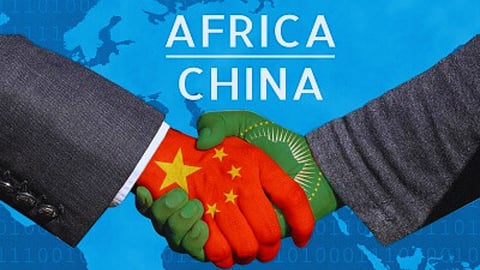
This article was first published by The Common Sense.Key topics:China removes tariffs for African exporters, boosting market access.Move signals strategic intent and deepens China–Africa ties.Africa becomes key in global trade, geopolitics, and growth..Sign up for your early morning brew of the BizNews Insider to keep you up to speed with the content that matters. The newsletter will land in your inbox every morning on weekdays. Register here.Support South Africa’s bastion of independent journalism, offering balanced insights on investments, business, and the political economy, by joining BizNews Premium. Register here.If you prefer WhatsApp for updates, sign up to the BizNews channel here..By The Common Sense Editorial Board.On May Day, Beijing will extend zero-tariff access to 53 African countries, the largest unilateral trade concession ever offered to the continent. Crucially, it requires no reciprocity. In scale and symbolism, this is one of the most significant diplomatic and economic gestures ever directed at Africa.At a moment when many advanced economies are reassessing trade preferences and tightening market access, China has moved in the opposite direction. Rather than conditioning access on political alignment or complex compliance regimes, it has chosen to open its market more fully and unilaterally. For African exporters across multiple sectors, that reduces cost barriers immediately and improves competitiveness in the world’s second-largest economy.The move must be understood not simply as a trade technicality but as a statement of strategic intent. Africa is no longer treated as peripheral in global trade or security architecture. By extending zero tariffs to virtually the entire continent, China is affirming that African economies are integral to its long-term commercial and geopolitical calculus.The economic implications are straightforward. Tariffs, even when modest, act as price penalties that reduce margins and distort market access. Eliminating them improves the relative position of African goods in the Chinese market overnight. For many African countries operating on narrow export margins, even small tariff adjustments can materially affect profitability and investment incentives. Removing them entirely creates a more predictable and open trading environment..Read more:.China pouring exports into Africa as Trump tariffs require new markets.Critics may argue that Africa’s trade with China remains heavily concentrated in commodities. That observation, while factually accurate, misses the larger point. The removal of tariffs does not lock Africa into any particular export structure; it removes one layer of constraint. What countries choose to export, and how they build their production capacity, remains a domestic policy question. What China has done is reduce friction and expand opportunity.The political implications are vast. Chinese and American security thinkers alike are largely prepared to concede a zone of strategic US dominance in the Western Hemisphere and a similar Chinese zone in Southeast Asia. But neither side has the resources to extend real dominance beyond those zones. Across much of the Indo-Pacific and the South Atlantic, their struggle will be for parity and deterrence. The battle for African affections will be important in determining which side holds the upper hand in that struggle. Africa accounts for more than 50 votes in global fora. It is home to more cities of one million inhabitants than Europe and America combined. The bulk of the world’s fastest-growing economies are in Africa. Projected over the next 20 years, the people in those economies and cities represent the last great untapped global consumer market. Its untapped agricultural potential is key to future protein demand solutions. And that is before getting to its minerals and other natural resources.In the battle for Africa, China has made its biggest move yet and, in both practical terms and in strategic effect, it is a very good one. Your move, Europe and America..This article was first published by The Common Sense and is republished with permission.