
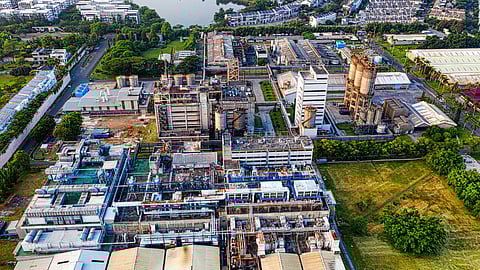
Why US industrial real estate is quietly becoming one of the strongest performers.

When most people think of industrial real estate, they envision massive Amazon-style distribution centers lining highways. Those large-format properties capture the headlines. But behind the scenes, a less glamorous segment is delivering some of the most consistent and resilient performance in commercial real estate today: small-bay industrial. We define small-bay properties as buildings under 10,000 square meters (roughly 100,000 square feet), with the sweet spot often around 5,000 square meters or smaller suites. These assets, ranging from flexible light-industrial spaces to micro-bays, serve a diverse mix of tenants and are proving remarkably durable.
E-commerce continues to fuel demand, particularly for last-mile and local distribution hubs. Industry estimates suggest that for every $1 billion in additional e-commerce sales, roughly 1.2 million square feet (MSF) of logistics space is required. U.S. online retail sales surged from about $600 billion in 2019 to over $1.5 trillion in 2025 (with some forecasts projecting closer to $1.47–$1.8 trillion by year-end or into 2030), driving the need for millions of square feet in new space to handle efficient parcel delivery to consumers.
Compounding this is the resurgence in light manufacturing, accelerated by reshoring and nearshoring trends. Policies such as tariffs, supply chain resilience initiatives, and incentives under recent legislation have encouraged companies to bring production back to the U.S. or closer to North America. This shift favors smaller facilities for component suppliers, assembly operations, tool shops, and specialty fabricators - often in the 2,000–15,000 square foot range, located near population centers - residential areas, and business districts rather than remote mega-warehouses.
Demand from small and mid-sized businesses remains robust, supported by broader economic expansion. U.S. GDP grew 4.4% in Q3 2025 before moderating to 1.4% in Q4 2025 (with full-year 2025 growth at 2.2%), reflecting steady consumer spending, investment, and the ongoing effects of tax rebates, investment incentives, and economic stimulus measures.
These dynamics explain the sector's exceptional performance. National vacancy rates for small-bay properties (especially under 50,000 square feet) hover in the 3–5% range, often around 3.4–4.8%, roughly half the 7–9%+ rates seen in the broader industrial market or large-format big-box facilities. In many markets, small-bay vacancy has remained below 5%, even as overall industrial vacancy stabilized or rose modestly into 2026.
Over the past decade, developers prioritized large distribution centers, which were easier to finance and attract national tenants. Far less small-bay space was added, with new construction in this subsector representing a tiny fraction (often 0.5% or less) of existing stock. This chronic undersupply, exacerbated by high land costs, restrictive zoning near urban areas, and construction economics favoring bigger projects, has kept competition limited.
With constrained supply meeting persistent demand, rents have risen steadily. In many markets, small-bay asking rents have grown as fast as, or faster than, those for larger warehouses. Rents for suites under 50,000 square feet have increased over 40% since 2020 (versus ~30% for the broader market), with some areas seeing rates double from pre-pandemic levels to $12–$15 per square foot NNN or higher. Even as overall industrial rent growth slowed to around 1–2% in 2025, small-bay segments often outperformed, especially in secondary and emerging markets.
Tenant stability adds another layer of strength. Small businesses in these spaces are typically rooted in their communities, relying on proximity to customers, suppliers, and employees. Relocating is costly and disruptive, leading to high renewal rates and reliable occupancy. Properties often feature multiple tenants, providing natural diversification: a single vacancy rarely jeopardizes the entire income stream, unlike single-tenant mega-warehouses. This multi-tenant structure offers greater resilience during economic fluctuations.
These buildings are also inherently difficult to replicate. Prime land near population centers commands premium prices, zoning restrictions abound, and construction costs tilt toward larger-scale projects. Limited new development protects existing assets' long-term value and supports sustained rent growth and occupancy.
No sector is entirely insulated from macroeconomic shifts, such as interest rate changes, trade uncertainties, or broader slowdowns. Yet small-bay industrial has demonstrated exceptional resilience by serving essential, ongoing business needs, last-mile logistics, localized manufacturing support, and flexible spaces for growing enterprises, rather than cyclical or discretionary trends.
From an investor perspective, this segment delivers what many seek: reliable demand drivers, scarce new competition, diversified income streams, and strong potential for consistent rent appreciation and total returns. It may lack the flash of headline-grabbing mega-projects, but small-bay industrial has quietly emerged as one of the strongest-performing corners of commercial real estate in the United States.
For those pursuing exposure to real estate linked to tangible, local economic activity, rather than volatile, trend-driven narratives, small-bay industrial in the US remains a standout, compelling opportunity in the current market.