
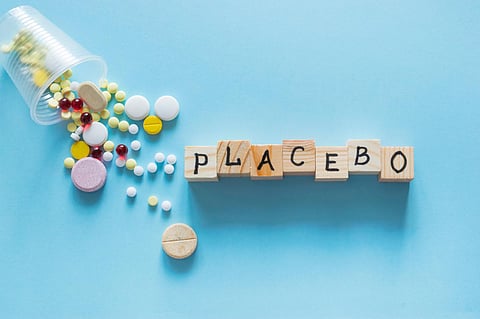
Can belief alone heal? The placebo puzzle medicine still can't solve
A sugar pill cannot cure anything. Yet patients given one often feel better. Beth Brunning traces this medical puzzle from Plato's headache charm to modern drug trials. She also explores its darker twin, the nocebo, where a harmless treatment makes people feel worse because they expect it to. Children respond most strongly. Injections outperform pills. Even a doctor's bedside manner plays a part. And the beauty industry's lavish packaging may be backfiring. The common thread is belief.
By Beth Brunning
Harvard Professor, last century.
A medicine or procedure prescribed for the psychological benefit to the patient rather than any physiological effect.
A substance that has no therapeutic effect, used as a control in testing new drugs.
A measure designed merely to humour or placate someone.
The Oxford Dictionary
The first recorded user of a placebo by a famous figure in history may be Plato, whose headache cure consisted of “a certain leaf, but there was a charm to go with the remedy; and if one uttered the charm at the moment of its application, the remedy made one perfectly well; but without the charm there was no efficacy in the leaf.”
In 1799 the first known experiment was conducted using a placebo. English physician John Haygarth tested a popular “cure” which involved metal instruments that “could draw out” disease, the use of which cost the patient a figurative arm and leg. Using wooden tools instead, Dr Haygarth showed “to a degree which has never been suspected, what powerful influence upon disease is produced by… imagination.”
Often a placebo is a sugar pill. It can also be a harmless saline injection, or even bogus surgery, where it’s pretended that surgery has taken place when it has not. (No references were found that explain how this is possible. One would think the patient would notice.)
In modern medicine, placebos are used in clinical trials as a control group. When there has been no medication but the participants in the control group feel a difference, this is “the placebo effect”.
If the test subjects agree to it, none of them know who is getting the actual treatment being tested and who is getting the placebo. This is because the certain knowledge of receiving either the placebo or the treatment affects patients’ experience, or what they imagine they are experiencing. Indeed, it affects the clinicians’ opinions too.
One view of placebos amongst the medical fraternity is that placebos do influence patients’ experiences of pain and nausea but are not thought necessarily to have much greater value than that. Ethics play a major role here. The idea of the lack of informed consent from patients is seen as a thorny issue; deceit between doctors and patients is deeply frowned upon.
The use of placebos continues however because of the mysterious “placebo effect”, where pain and symptoms are relieved by the patient’s belief and their physical experience that they feel better.
Such is the power of our minds.
In one interesting research case, placebos improved motor functions in people suffering from debilitating, painful and as yet incurable Parkinson’s disease. Short-lived and scientific proof of nothing definite yet, except the mysterious power of a drugless drug.
Placebos’ place in pain relief is frequently apparent; they alter a person’s perception of pain. According to the American Cancer Society, “A person might reinterpret sharp pain as uncomfortable tingling.”
But it is hard still to tell the difference between the placebo effect and the effects of biased responses and observations in trials. Unless trials are true double-blind experiments, bias cannot be completely avoided and therein lies the ethical conundrum.
Studies so far still tell us that real pain relievers are more effective when the patient knows they’re receiving them (instead of knowing that they might be receiving the placebo).
The greatest response of all to placebos seems to be from one group: children. Impressionable young minds? Perhaps so. Respondents in general seem to react more positively the higher the “dose” of placebo. Pills have the lowest score, capsules do better and injections (perhaps because most of us hate them) have the greatest response.
The attitude of medical professionals also plays a role in efficacy. The better the bedside manner, the more positive the effect felt by the patient.

The accepted etymology of the word “placebo” is that it’s derived from the Latin word “placeo”; “placebo – I shall please”. Less well known is the opposite of the placebo. The nocebo, derived from the Latin “nocere”; “to harm”.
A nocebo is actually the same as a placebo in that it’s really a harmless substance or treatment. But because the patient is for some reason convinced that it will have harmful side effects or worsening of symptoms, the patient experiences them. Placebo/nocebo are like yin and yang. Negative expectations cause a negative effect.
The medical profession tries to diminish or eliminate the nocebo effect for obvious reasons. It could be especially damaging to drug trials which might be great leaps forward in medication, or it might adversely affect patients taking medicine that they desperately need.
Various studies have had a lot of interesting results. Increasing a placebo effect might reduce the result of the nocebo effect. Cheering the patient up and improving their mood can reduce the negative reaction too.
The beauty business doesn’t seem to have heard of this yet, but some study results have been surprising. In one experiment, the more costly the product packaging looked, the greater the nocebo effect. In this experiment the group claimed they had more and worse side effects from a skin cream in fancy packaging than the identical cream presented in a cheaper fashion. Maybe all those beautiful boxes and pots are achieving the opposite of the beauty industry’s intentions.
Although the prevailing view in advertising and marketing is that the more expensive things look, the better consumers believe them to be.
Trust of course is a vital element in anything we are given for ailments. If our tried and tested medical professional trusts the treatment, so probably will we. If government spokespeople or faceless health authorities are advocating a treatment, as in the global pandemic a few years back, do we feel trust? Not so much.
The nocebo effect has been nicely summed up by an empathic clinician by the name of Dr Merrill. “If you’re having trouble with side effects out of proportion to what is expected,” he said, “you might consider seeking help for anxiety. Not because the sensations are not real…”
“… but rather because the feelings are all too real.” Essentially, there is no single scientifically identifiable placebo response. It remains one of the great medical mysteries, the area of grey matter where biology and psychology intersect.
The one thing it proves however is this: the original treatment for pain, illness and disease is as deeply ingrained in us as in our earliest ancestors.
It is, quite simply, belief. A final word. Consider if you will the global anti-gluten fad. All over the world, people are eating “gluten-free” because they are “allergic” to, or made unwell by, one of the oldest ingredients in human food. In fact, the only people for whom gluten is a real medical problem are those with rare coeliac disease. But millions of us who are perfectly well, feel so much better, don’t we… when we stop eating gluten
REFERENCES:
https://www.vox.com/science-and-health/2017/7/7/15792188/placebo-effect-explained
https://en.wikipedia.org/wiki/Placebo
https://theconversation.com/the-fascinating-story-of-placebos-and-why-doctors-should-use-them-more-often
https://en.wikipedia.org/wiki/Nocebo
https://www.medicalnewstoday.com/articles/the-nocebo-effect-can-we-think-ourselves-unwell#10
https://my.clevelandclinic.org/health/diseases/14240-celiac-disease
https://www.verywellhealth.com