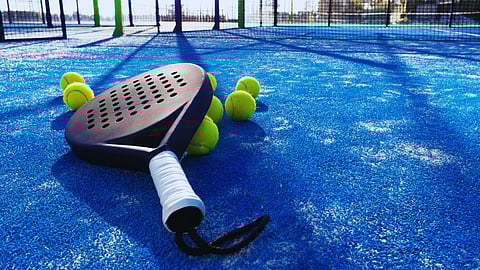
Key topics:Rekindling childhood hobbies for adult joy and connectionPadel as a fast-growing, social, and addictive sportPlay as vital for adult wellbeing and personal growth.Sign up for your early morning brew of the BizNews Insider to keep you up to speed with the content that matters. The newsletter will land in your inbox at 5:30am weekdays. Register here.Support South Africa’s bastion of independent journalism, offering balanced insights on investments, business, and the political economy, by joining BizNews Premium. Register here.If you prefer WhatsApp for updates, sign up for the BizNews channel here..By Jemima Kelly.It’s a funny thing, becoming an adult. We spend our childhoods and teenage years learning the piano, going to dance classes, drawing, singing, playing sports — often at vast expense to our parents. And then we get to an age at which these things feel too silly, too indulgent, too juvenile, so we often give them up entirely in favour of more grown-up leisure pursuits: fancy meals, farmers’ markets, saunas, yoga classes, and, if we’re really evolved, personal development. But then at a certain point some of us get a different feeling. All of sudden we wonder: why am I not doing any of those fun, frivolous, joyful things that I used to do? Why do I only have hobbies that involve either consuming something someone else has created for me or some form of navel-gazing? When did I give up playing around? Don’t get me wrong — I am all for “doing the work”, as they call it. I use the term “navel-gazing” somewhat facetiously: I believe we should all be consciously trying to make ourselves into better, kinder, happier human beings, and I think that is a life-long effort. No undertaking in this vein is too “out there” for me; I have a quarterly column in HTSI called “Adventures in Woo Woo”, and adventure I do. But I also wonder whether we spend so much time looking into either ourselves or our phone screens that it leaves us with little time for looking out.I suddenly realised earlier this year — while, yes, doing a deep dive into my soul via the medium of writing “morning pages” — that I had an inexplicably profound craving for playing some form of sport. Specifically one that involved whacking something quite hard with a racket or bat (I’m sure a psychoanalyst would have thoughts). For whatever reason, my heart was calling out for tennis, squash, badminton, rounders, even ping pong.And so, two weeks ago, I did something about it. I always slightly resist getting involved in crazes — feeling the need to maintain some kind of countercultural credibility — but not this time. Nick Clegg, Kate Middleton, David Beckham, and now me too. Having listened to a friend go on about how much fun it was for several months, I caved, and took myself along to an introductory session at my local padel club. I am utterly, wonderfully, ruinously addicted to it: I’ve played every day I have been in London since. .Read more:. FT: Why is India so bad at sports? It underwhelms in the Olympics relative to its population and economic heft.I’ve long envied the kind of men who meet up once a week to play football together — yes, I know I could do that too, but it is not a default activity for women in the same way that it is for men (or at least for the moderately sporty ones). There has always been something appealing to me about the idea of spending time in other people’s company without speaking very much to them, and for the decidedly non-stressful and uncomplicated purpose of winning a game. Padel, designed to be played in doubles on a court small enough to feel intimate, benefits from having both the social factor and the network effect of football. It is the world’s fastest-growing sport and is surging in popularity in Britain: at least 400,000 people played in 2024, according to the Lawn Tennis Association, up from 129,000 the previous year. Furthermore, the fact that one of the ways you can win a point is by smashing the ball hard enough against the glass at the back of the court to make it rebound across to the other side of the net makes it feel, particularly for those of us who have played tennis, not just novel but decidedly rebellious. It’s the kind of innocent fun that one doesn’t get to experience much as an adult. My introduction to the game was a humbling experience: I hadn’t realised we were being graded during the session, and at the end I was given a 1.5, from a range of 1 to 7. But this, I am realising, is part of the beauty of my new addiction: not only am I engaging in an effortful, offline, social activity but I am also doing something I’m not very good at — excellent for relinquishing the fat, relentless ego, for giving us the rewarding possibility of getting better at something, and, studies suggest, for making us even better at the things we’re already good at.Most importantly, though, I’m switching off my overthinking brain in a delightfully cathartic, joy-giving way — one that connects me to other human beings, rather than leaving me isolated and untethered in the way that turning to screens tends to do.We have long known that play is crucial to the development and wellbeing of children. Why would we assume it was different from adults? Maybe we just need to reframe it: if you’re not playing, you’re not really doing the work..© 2025 The Financial Times Ltd.