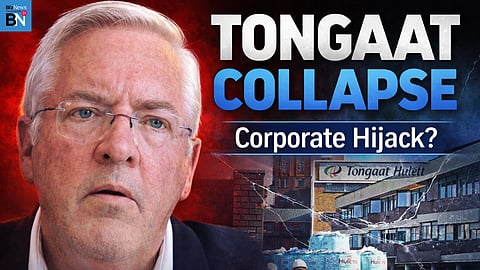
After seven years sounding the alarm, analyst David Woollam breaks down Tongaat Hulett’s implosion, the controversial Vision consortium takeover, and the looming economic fallout for KwaZulu-Natal’s North Coast. With billions at stake and livelihoods on the line, this is the inside story of governance failure, corporate manoeuvring and what happens next..Sign up for your early morning brew of the BizNews Insider to keep you up to speed with the content that matters. The newsletter will land in your inbox at 5:30am weekdays. Register here.Support South Africa’s bastion of independent journalism, offering balanced insights on investments, business, and the political economy, by joining BizNews Premium. Register here.If you prefer WhatsApp for updates, sign up to the BizNews channel here..Watch here.Listen here.BizNews Reporter.KwaZulu-Natal’s iconic Tongaat Hulett has finally reached the point many feared but few believed would actually arrive. After years of warnings, boardroom battles, forensic investigations and business rescue extensions, the once-proud sugar giant is staring down liquidation. And with it, the livelihoods of thousands across the North Coast hang in the balance.In a candid interview with BizNews, financial analyst Dave Woollam unpacked what he believes is one of the most tragic corporate collapses in modern South African history. Not just because of the scale of destruction, but because so much of it, he argues, was avoidable.Woollam has no formal role at Tongaat Hulett. He is not a sugar executive, nor a board insider. But over the past seven years he has immersed himself in the company’s financials, governance failures and restructuring attempts. What he saw troubled him deeply.At the heart of the crisis sits a mountain of debt. Tongaat racked up roughly R12 billion in borrowings during years of overstated profits and aggressive expansion. When the accounting irregularities surfaced, billions in assets were written down. Yet the debt remained. What followed was a spiral of defaults, emergency funding, asset sales and ultimately business rescue.According to Woollam, the business rescue process, which stretched for 37 months, became a feeding ground for professionals while the core business deteriorated. He estimates that more than R1 billion has been spent on professional fees since the crisis began. Meanwhile, the company stopped publishing financial statements in 2022, citing audit complexities.The executives who presided over the collapse, including former CEO Peter Staude, have yet to face meaningful consequences. Investigations have dragged on for more than six years. Woollam describes it as symptomatic of a broader failure in South Africa to prosecute white-collar crime swiftly and decisively. Time, he says, erodes accountability.But the most controversial chapter may be the emergence of the Vision consortium.Vision 155 Investments acquired the bulk of Tongaat’s debt from the banks. Instead of injecting significant new equity into the business, Vision effectively bought control by purchasing loan claims. Those claims, originally worth over R11 billion including accumulated interest, were reportedly acquired at a substantial discount.Woollam alleges that Vision used leverage over the debt structure to sideline competing bidders and consolidate control, all while relying heavily on funding from third parties rather than its own capital. He stops short of calling the consortium unfit to run the assets, but questions whether their focus is long-term industry stability or short-term return on investment.The stakes are enormous.Tongaat’s South African operations crush roughly 500,000 tons of sugar annually. Farmers supplying cane to the mills stand to earn around R4.5 billion this season. If the mills do not operate, that income evaporates. The cane cannot simply be stored or redirected. It must be crushed or it loses value.Woollam warns that a failure to stabilise Tongaat would “decimate” the North Coast economy in the literal sense of the word. Banks have billions in exposure. Thousands of farmers depend on the mills. Entire communities from Tongaat to Empangeni rely on the sugar value chain.Meanwhile, Tongaat’s African assets in Zimbabwe and Mozambique remain highly valuable. Triangle and Hippo Valley in Zimbabwe are among the best sugar estates in the world. Woollam believes these assets alone could be worth more than the discounted price paid for the debt. That raises the uncomfortable possibility that while South African operations flounder, the offshore crown jewels could ultimately benefit new owners.There are also persistent misunderstandings among the public. Mount Edgecombe Estate, often associated with Tongaat, is no longer owned by the company. The residential estates and golf courses operate under homeowners’ associations and are legally separate. But the psychological link between the company and the North Coast’s development legacy remains strong.So what happens next?Woollam believes the only viable path forward requires humility from all sides. The Industrial Development Corporation, commercial banks, farmers and Vision must return to the table with a shared objective: saving the industry rather than winning the argument.He acknowledges that South Africa has a habit of drifting to the edge of crisis before pulling back at the last moment. His hope is that Tongaat will follow that familiar national script. That cooler heads will recognise the systemic risk and intervene before liquidation triggers cascading damage.At its peak, Tongaat Hulett was more than a sugar producer. It shaped the North Coast corridor, developed Gateway, pioneered Mount Edgecombe and helped define KZN’s industrial identity. Its collapse represents more than a balance sheet failure. It is a test of corporate governance, prosecutorial resolve and economic pragmatism.Whether this is truly the beginning of the end, or merely another chapter in a long rescue attempt, remains uncertain. But one thing is clear: the future of a billion-rand industry now hinges on whether South Africa’s institutions and business leaders can put ego aside and choose stability over confrontation.For KwaZulu-Natal, the cost of getting it wrong would be far greater than one failed company.