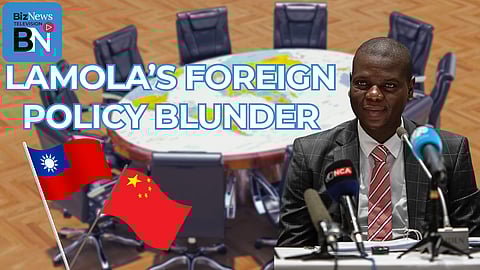
In an interview with BizNews founder Alec Hogg, Ryan Smith, the DA's new Spokesperson on International Relations and Cooperation, discusses his challenging roles and South Africa's foreign policy 'follies'. He criticises ruinous 30% Trump tariffs, citing negotiation failures. Smith strongly condemns Ronald Lamola's "ridiculous decision" to downgrade the Taiwanese embassy. He highlights Taiwan's crucial role as the sole supplier of vital semiconductor chips (TSMC), arguing this alienates essential trade, hindering SA's manufacturing and job creation efforts. Smith advocates for a truly non-aligned, South Africa-first foreign policy driven by economic development, not ANC party interests, stressing the need for career diplomats. The DA seeks new agricultural markets to offset these challenges. .Sign up for your early morning brew of the BizNews Insider to keep you up to speed with the content that matters. The newsletter will land in your inbox at 5:30am weekdays. Register here.Support South Africa’s bastion of independent journalism, offering balanced insights on investments, business, and the political economy, by joining BizNews Premium. Register here.If you prefer WhatsApp for updates, sign up to the BizNews channel here..Watch here.Listen here.BizNews Reporter In a candid interview with BizNews' Alec Hogg, Ryan Smith MP, the Democratic Alliance's new Spokesperson on International Relations and Cooperation, provided a trenchant critique of South Africa's current foreign policy direction, labelling it as riddled with "follies" that undermine national interests. Smith, who recently took over from Emma Louise Powell, also shed light on the demanding nature of his new portfolio and constituency work. Smith described his new roles as "hospital passes," particularly his constituency head position in Knysna. He explained that constituency allocations are made by provincial leadership, and he inherited Knysna after Dion George became a national minister. Despite Knysna's beautiful scenery, the town faces significant political and service delivery challenges, including a "splintered ANC-led coalition" and severe problems with wastewater treatment and water supply, common issues across many South African municipalities. Operating in opposition makes progress "very difficult," though the DA works to hold the coalition accountable, with ongoing processes to address councillor misconduct and even consider placing Knysna under Section 139 administration. Smith expressed hope that voters would "learn their lesson" and return a DA majority in 2026. Regarding his new role as spokesperson, Smith acknowledged it as a "tough position," especially given the "eventful" nature of foreign policy in recent years. He addressed perceptions that his predecessor, Emma Louise Powell, was "shoddily treated," asserting that she received substantial party support, including protection services when threatened and assistance for overseas trips. Smith noted that dealing with threats and intimidation is an "occupational hazard" for MPs, citing Dean McPherson's experience with the IDT oxygen tender, and affirmed the DA's commitment to supporting its members. A central focus of the interview was South Africa's foreign policy missteps, starting with the "ruinous" 30% Trump tariffs on South African exports. Smith criticised what he called a "sense of negligence" from the Department of Trade, Industry and Competition (DTIC) and the Department of International Relations and Cooperation (DIRCO). He pointed out that while other SADC counterparts negotiated their tariffs down to 15%, South Africa missed initial and extended deadlines, getting "caught on the back foot" and failing to "preempt and predict" the likely outcomes of the Trump administration. Smith strongly emphasised the need for competent, career diplomats and trade specialists to represent South Africa's strategic interests abroad, particularly in Washington, which remains our second-largest trading partner. He criticised the ANC for appointing "political hacks" or "party loyalists" to key foreign missions, sometimes as a means to "sweep corruption scandals underneath" by posting former mayors or ministers facing allegations abroad. Smith highlighted that such crucial roles require individuals who are non-partisan, skilled in trade negotiations, and driven by a patriotic "South Africa first" mindset. He lamented the apparent disregard for experienced individuals like Yohan Hyaman, who spent decades at the World Trade Organization, in favour of politically connected appointees. The most "serious" misstep, according to Smith, was Ronald Lamola's decision to downgrade the Taiwanese embassy. Smith called it a "ridiculous decision" that inflicted self-damage on South Africa's economy. He underscored Taiwan's critical role as the sole supplier of vital semiconductor chips (TSMC), essential for industries from auto manufacturing (where a single seat mechanism requires a chip) to all modern electronic devices. Smith argued that alienating such a crucial trade partner undermines South Africa's economic growth and job creation efforts, especially for aspiring black industrialists. Smith contended that Lamola's justification, based on recognising the One China policy, was "completely disingenuous" because South Africa had recognised this policy since 1998 while still maintaining good trade relations with both China and Taiwan. He stressed that other democratic nations also recognise the One China policy without isolating trade with Taiwan. Smith's core argument is that the ANC's "party political interests have now infiltrated our foreign policy," aligning with countries like Russia (whose invasion of Ukraine the ANC refused to condemn) and Iran, rather than serving South Africa's national interest, particularly in addressing unemployment and inequality. He firmly stated that the foreign minister should act "what's best for the country, not what's best for the ANC". Looking ahead, Smith articulated what a "truly non-aligned, South Africa-first foreign policy" would entail. It would require South Africa to clearly define its national interest and pursue a "comprehensive and well-thought-out long-term strategy" rather than short-term political tactics. As a middle power with an emerging economy, South Africa must focus its foreign policy on growing the economy and creating jobs, leveraging international trade to achieve these goals. Smith cited India as a prime example of a non-aligned nation that prioritises trade and economic development without getting embroiled in foreign policy disputes. Finally, Smith discussed the DA's efforts to counteract some of these challenges. He mentioned that DA ministers, such as John Steenhuisen in Agriculture, are working to offset potential Trump tariffs by opening new agricultural markets across Asia, including deals with Indonesia, Japan, and Thailand. He concluded by stating that while no external force can "save" South Africa from its domestic policy issues or compel the ANC to change, the ultimate solution lies with South African voters making better decisions to strengthen the DA, enabling them to dismantle "bad domestic policy" and improve the country's international standing.