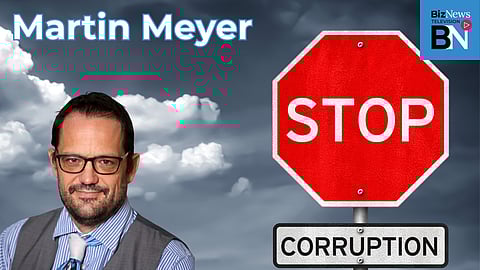
The KwaZulu-Natal Public Works and Infrastructure Department has been hard at work the past few months to turn around the dysfunction there. In this interview with BizNews, MEC Martin Meyer gives an update of the milestones reached. He says the rot was “deep” regarding corruption and maladministration. “And even though it was a small group of officials, they were well embedded and we had to take some very strong action regarding those officials…Currently, our HOD is going through his disciplinary and four other senior officials were successfully prosecuted within the department and their services with us terminated.” He further lists various radical cost-cutting measures - including moving away from consultants - to save millions. Meanwhile, huge progress has been made to pay contractors, some of whom had been waiting five years. Furthermore, a proactive stance against the Construction Mafia has resulted in “many arrests…, and the NPA is now charging people…and in the last six months we've had zero disruptions at any of our building sites”..Sign up for your early morning brew of the BizNews Insider to keep you up to speed with the content that matters. The newsletter will land in your inbox at 5:30am weekdays. Register here.Support South Africa’s bastion of independent journalism, offering balanced insights on investments, business, and the political economy, by joining BizNews Premium. Register here.If you prefer WhatsApp for updates, sign up to the BizNews channel here..Watch here.Listen here.Edited transcript of the interview .Chris Steyn (00:01.709)The KwaZulu-Natal Public Works and Infrastructure Department has been hard at work the past few months to try and turn around the dysfunction there. We get an update from MEC Martin Meyer.Martin Meyer (00:16.472)Good morning, thank you from a very warm Durban.Chris Steyn (00:21.749)What have been your biggest challenges thus far?Martin Meyer (00:26.328)I think the three challenges that I would focus on firstly is how deep the rot was regarding corruption within the department and maladministration. And even though it was a small group of officials, they were well embedded and we had to take some very strong action regarding those officials and clearing out that rot within the department. Secondly is just the bad use of the budget. We don't have a large budget, one of the smallest budgets within the province, but the money was really wasted. Money was spent on the wrong things.There was not good controls on the way the money was spent. That means that the little we got just wasn't used well. So we had to focus on that. And then the third thing is that I inherited a department that was fully paper-based. It is a department that still follows methods used in the Nineties to manage the department. So we are really focused on dragging this department into the 21st century and digitalising the department and making sure that we are more efficient in the way we deliver services to the people of KwaZulu-Natal.Chris Steyn (01:23.885)What have you achieved in the eradication of corruption?Martin Meyer (01:28.546)So one of the things that I focused on when I came into office is that I asked for all the forensic reports that was done by the Premier's office into the department and I was shocked that after 20 forensic reports going back some of them five, six, seven years, not one of them were actually implemented. So none of the recommendations, no report were implemented. So we then, took an executive decision that those reports need to be implemented. We took that stance. Disciplinaries against some officials were done, some of the recommendations were done, like we now record all our bid committee meetings audio visually through AI technology, which was a recommendation in the reports. So we have really now moved forward. We also took a tough stance against officials. Currently, our HOD is going through his disciplinary and four other senior officials were successfully prosecuted within the department and their services with us terminated.And then another big step that we took is we invited various NPOs that work in the field of corruption, like OUTA, like Corruption Watch and other NPOs to a meeting. We played open cards, we put all our things on the table with them and say, this is what we're doing currently, but how can you advise us? What should we do differently? And currently we're working very closely with those organisations to strengthen our whistleblowing, but also strengthen our internal measures to prevent and curb corruption in the department. And we're really on the right track.Chris Steyn (02:52.791)What cost cutting measures have you been able to implement?Martin Meyer (02:56.845)I started in my office. Previously, two budget speeches back, it cost the department 300,000 Rand to present the budget. We cut that back. Last year it was 300 Rand. This year we cut it back to zero Rand. We didn't spend any money on the budget because we do everything in-house, no glossy things, anything like that. The other thing we did department-wise is we looked at the use of cell phones and we realised there were officials that had two or three cell phones from the department that we're paying for. We had over 50 former officials that still had cell phones. They don't even work for the department anymore and they still had cell phones from the department. And some officials were just misusing it. So we've totally changed the way we do cell phones. We now just give a amount to the officials. They can pick their own cell phones from the preferred list, but they can't go over the amount because we now stuck to amount. And we've already saved millions just doing that very simple thing of taking control of the devices we give.Also within the Ministry office, in the six months before I took office of last year, it cost over three million rand to run this Ministry. And the office that I hold here, in the second six months, only 200,000 Rand. Because we just said, we can't just take seven officials to travel with me all the time, travel all over the province using many vehicles and all those type of things. So that's the other thing that we have done.Through digitalisation as well, we'll be saving over six million rand in printing costs for the department. So there's a lot of measures and it looks like small things, but they all do add up at the end of the day. And then another big thing is that we are really moving away from consultants. We actually do have the expertise of the department. So I was unsure why do we keep using very expensive consultants if we are able to deliver those services ourselves with the engineers, architects and all that that we have. Very recently we opened a school…that we didn't use any consultants and that cost us, saved us almost eight million rand just on that one project alone.Chris Steyn (04:50.403)So what progress has been made with the non-payment of contractors?Martin Meyer (05:04.269)So I'm very glad you mentioned that because it is one of the major problems that we face as a department. We owed contractors for five years, some of them, and this is very unfair. And as I always say to people, a contractor and a subcontractor that's not paid is a child that's going hungry to bed that night. And I couldn't live with that. Our main challenge is that we're an implementing department. So the budget for infrastructure development doesn't come to us. It goes to various client departments, mostly education, health, and other departments and they weren't paying us. So projects were happening. Our contractors were on site, but we weren't getting the money from those client departments. And when I took office, client department owed this department over 750 million Rand, which means we just couldn't pay any of our contractors. We took a very tough stance with our client departments, said that we will stop all work with other departments if they do not pay the bills that they owe us. We've managed to recoup most of the money from our client departments and we've released over 550 million Rand of payments in the last three months to contractors. We are now on a 30-day schedule with our contractors. We've paid most of our back monies owed to contractors and that's the right thing to do. It's also economically, it just makes sense because that means we've pumped over 500 million rand into the economy of KwaZulu-Natal, which is a boost to the province. And this is money that we owe to people for work done.We further got an agreement with the Treasury of the province that all money now for infrastructure development will be ring-fenced, so departments can't use it for anything else. They must pay their bills. And we've also informed other departments that we won't take on any new projects until their debt to us has been paid. And it was a bit of a tough stance, wasn't an easy road to take, but it was a necessary one. And as I said, now we're on track and there's no contractors that we owe over the 30-day period at this moment.Chris Steyn (06:53.473)Meanwhile, how are you dealing with project disruptions and the Construction Mafia?Martin Meyer (06:59.415)So yes, they're not my best friends. I don't think I'm in the Construction Mafia's Christmas card list. But we took a multi-pronged approach. First of all, we made it very clear. We do not negotiate with criminals. So if you come with weapons to our sites, we will not talk to you. You will not get anything from us. Secondly, we did say to business forums who want to come to us on the banner of peace that we will engage with them. And we've had various meetings. I can't even count how many with business forums across the province where they then denounce any violent acts, denounce disruptions, and are now willing to work with us. Thirdly, we've had meetings with SAPS and the NPA, and SAPS has been taking a much more proactive stance regarding the Construction Mafia. Many arrests have been made in the last few months, and the NPA is now charging people. So while we have the carrot on one side, there is the stick on the other side that there is very tough action against people from the Construction Mafia.And then lastly, we realised there's a structural problem in that we left the talking with the communities to the contractors and that's way too late and it puts unnecessary burden on the contractors. So we're in the process of creating a office within the department, a community liaison office. We will start talking to communities much, much earlier now when we're in the planning phase of a project, we will see what needs there are. So let's say a community doesn't have bricklayers, we will make sure that we train bricklayers within the community so that that 30% that's supposed to go to local labour actually does go to local, to the community, and that they themselves then take ownership of the project and they keep the Construction Mafia guys out who was just there for their own gain. We're also working very closely with a local government as well as with traditional leaders which plays a very important role in our province. And so far it's worked and in the last six months we've had zero disruptions at any of our building sites.Chris Steyn (08:52.161)What other milestones have you reached in turning around that apartment?Martin Meyer (08:58.945)Well, also one of the things that we're very proud of is that in the beginning of this year, we had…the biggest property conference in South Africa. And we reached out to NGOs, NPOs, the private sector and say, we own over 10,000 properties. Many of them are underutilised or unused. And what should we be doing with these properties? Because we have a saying in this department, if it belongs to the public, it should serve the public.We've got various different proposals that we are now implementing. We've recently put 88 properties on the market, but we don't necessarily look at the highest bidder. We also look at the use. So people must come up with proposals. So if the NPO says we can use this property for a women's shelter or anything like that, if anybody else maybe offers us more money, we will go with the women's shelter because that's what served the community where that property is. We also negotiated, for instance, with the Department of Agriculture and that many of our open pieces of land will now become community food gardens, so that we make sure that all the properties we own are serving the people of KwaZulu-Natal. Further to that, we reached out to various of the data companies and cell phone companies saying that we have a serious problem of connectivity in our province, as we are facing today in this interview, in that many rural parts of KwaZulu-Natal doesn't have connectivity. People can't phone a police station, they can't phone a local clinic. Just last week, we announced in …our most rural area that borders Mozambique and Swaziland, that we've released eight of our own properties and negotiated for 12 properties from the national government. So in the next following few months, 20 new cell phone towers will go up in areas where there are currently zero connectivity which means people in these rural areas …can actually now connect to the rest of the country. School kids can now use computers to connect and learn about the internet. People can phone their hospitals, their clinics, and that's something we're very proud of as a department. So we've really changed how the department works and making sure that this department actually serves the people of this province directly.Chris Steyn (11:05.901)Thank you. That was Public Works and Infrastructure MEC for KZN. Martin Meyer speaking to BizNews about the turnaround in his department. Thank you, Martin. I'm Chris Steyn.Martin Meyer (11:18.007)Thank you so much. Thank you.