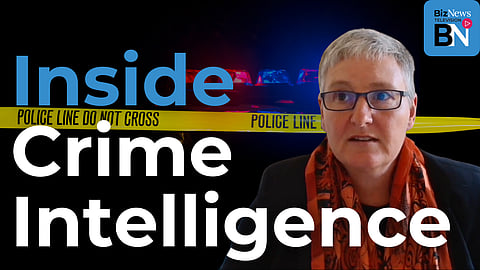
In a hard-hitting interview with Alec Hogg, legal scholar Dr Jean Redpath exposes the deep dysfunction inside South Africa's crime intelligence division, from secret Treasury-funded slush budgets to the political protection of unaccountable task teams. She argues that General Nhlanhla Mkhwanazi's public heroism masks entrenched corruption and resistance to reform. Redpath links the crisis to post-state-capture patronage networks, KZN's violent political history, and the ongoing battle between constitutional democracy and authoritarian control, warning that the “cult” around powerful police figures poses real danger to South Africa's future.Sign up for your early morning brew of the BizNews Insider to keep you up to speed with the content that matters. The newsletter will land in your inbox at 5:30am weekdays. Register here.Support South Africa’s bastion of independent journalism, offering balanced insights on investments, business, and the political economy, by joining BizNews Premium. Register here.If you prefer WhatsApp for updates, sign up to the BizNews channel here..Watch here.Listen here.BizNews Reporter.In an interview with BizNews founder Alec Hogg, legal scholar Dr Jean Redpath of the Dullah Omar Institute lays bare the extent of dysfunction, corruption and political manipulation within South Africa’s Crime Intelligence division.Redpath — who has spent more than a decade researching policing and criminal justice reform — explains how a “secret fund” concealed in the Treasury’s Vote 8 budget continues to bankroll abuse and patronage inside the South African Police Service (SAPS). While many of the state-capture figures have gone, she says, the “culture and traditions of corruption” remain deeply embedded.She links the ongoing turbulence surrounding General Nhlanhla Mkhwanazi and suspended Police Minister Senzo Mchunu to the struggle over those unaccountable resources. The result, Redpath warns, is a dangerous mix of factional politics, populist hero-worship and institutional decay. “People are desperate for a hero,” she says, “but what we’re seeing is resistance to reform dressed up as strength.”Redpath places the current crisis in historical context, tracing it back to KwaZulu-Natal’s violent transition politics and the centralisation of policing after 1994. She reveals that the Political Killings Task Team, which has absorbed nearly R500 million in six years, has delivered few convictions — even as the province’s murder rate climbed 58 percent.The interview explores the blurred line between ministerial oversight and political interference, the failure to implement court-ordered reforms, and the dangerous militarisation of policing symbolised by Mkhwanazi’s now-infamous July 6th press conference in battle fatigues.Redpath concludes that South Africa’s policing crisis forms part of a wider national struggle — the unfinished battle between constitutional democracy and authoritarian control.“We need a whole re-imagining of how we do policing in this country,” she tells BizNews. “Otherwise, the rot will simply regenerate.”