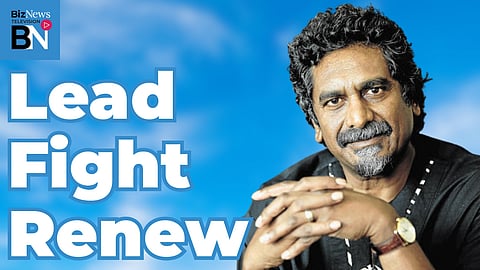
Jay Naidoo reflects on COSATU’s 40-year legacy, South Africa’s democratic journey, and the sacrifices that shaped the nation. He speaks candidly about corruption, failed leadership, collapsing services, inequality, and the urgent need for values-driven renewal. Naidoo calls on citizens, business, and unions to reclaim integrity, rebuild trust, and drive meaningful change..Sign up for your early morning brew of the BizNews Insider to keep you up to speed with the content that matters. The newsletter will land in your inbox at 5:30am weekdays. Register here.Support South Africa’s bastion of independent journalism, offering balanced insights on investments, business, and the political economy, by joining BizNews Premium. Register here.If you prefer WhatsApp for updates, sign up to the BizNews channel here..Watch here.Listen here.BizNews Reporter .Jay Naidoo, former COSATU communications officer and stalwart of South Africa’s mass democratic movement, shared his reflections on the country’s past struggles, current challenges, and the road ahead. Speaking with Dirk Hartford, Naidoo revisited the formative years of COSATU, the fight against apartheid, and the moral clarity that guided the movement.“COSATU was born in a time of fire, state repression, poverty, and racial tyranny,” Naidoo recalled. “We united millions of workers across colour lines, young and old, urban and rural, to fight for dignity, justice, and democracy. We shut down mines and factories, campaigned for international sanctions, and insisted that those in power negotiate because we were pragmatists, not radicals seeking destruction.”Naidoo stressed that the values driving COSATU were inseparable from the broader struggle for political and economic freedom. “It is impossible to separate the struggle of workers on the factory floor from the broader societal struggle for justice,” he explained. “That was the DNA of COSATU in 1985.”Yet, while the movement achieved extraordinary feats, Naidoo was frank about the challenges that have emerged since South Africa’s democratic transition. “Today, we face corruption, elite capture, inequality, and a collapse of trust in leadership. No liberation movement is immune from decay, and power must always be held accountable,” he said.He highlighted the failures of current leadership, pointing to government inefficiencies and the mismanagement of resources. Communities in mining regions, he noted, remain worse off despite billions of rand flowing into state coffers. “Children are in schools beside chrome dump sites, breathing contaminated air, drinking poisoned water. How is it possible that the law protects these resources, yet communities see almost no benefit?” Naidoo asked.Naidoo also critiqued contemporary activism and NGO-led development projects. “Activism today is often professionalised and funded by philanthropies,” he argued. “Organisers are removed from their base, and development becomes a weekend workshop rather than sustained engagement. When we organised in the 1980s, we were in the fields, hostels, and factories. We created change from the ground up.”For Naidoo, the solution lies in a return to values-driven leadership and citizen-led accountability. He pointed to Mandela’s example, describing him as a unifying figure whose compassion, courage, and ethical grounding inspired trust. “Mandela gave us a heart consciousness. He listened deeply and united us fiercely. Today, we need leaders who embody those values, who act with integrity and prioritise the public good,” Naidoo said.He also criticised narrow empowerment schemes, such as some Black Economic Empowerment (BEE) deals, which have benefited only a small elite. “Real empowerment is broad-based. It is about skills, entrepreneurship, rural development, and creating opportunities for ordinary people. We do not need messiahs; we need citizens to find the Mandela within themselves.”Naidoo concluded with a call to action for South Africans across sectors-business, unions, NGOs, and government. “We must refuse corruption, expose wrongdoing, and demand accountability. We must organise at a community level, educate, and empower. Change requires courage, persistence, and values-driven action. Everything in life is change. If we fail to evolve, we risk irrelevance.”His message was clear: South Africa possesses immense resources, talent, and potential. What is missing is ethical leadership, accountability, and a renewed commitment to social justice. For Naidoo, reclaiming these principles is not just a moral imperative but a necessity for the nation’s future.