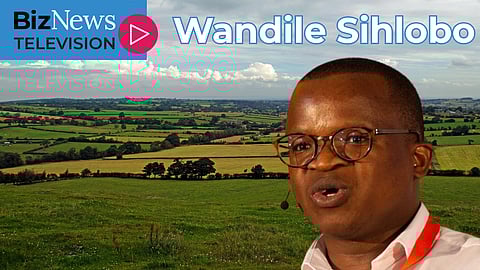
The South African government - under land redistribution - has acquired about 2.5 million hectares of land that has not yet been transferred. That is the figure given by Wandile Sihlobo, the Chief Economist of the Agricultural Business Chamber of South Africa, in this interview with BizNews. “That is in the government land holding account, as I speak with you. That land has not been transferred to Black South Africans with title deeds.” Sihlobo also releases the 2nd Quarter results of the Agribusiness Confidence Index that show there is still optimism in the South African agricultural sector.: https://www.agbiz.co.za/article/agbiz-idc-agribusiness-confidence-index-declines-mildly-in-q2-2025-498 He further debunks some of the myths and misconceptions around land reform and Expropriation Without Compensation (EWC). He comments on China planning to lower tariffs on a range of goods from African countries, and outlines ways to diversify export markets. Meanwhile, he is highly optimistic about the future of farming: “While some have portrayed the South African agricultural sector in the past few days and months as a sector that is under siege, it actually is not under siege…If anything, it is actually thriving… We are talking about a sector that has more than doubled in value and in volume terms since 1994.” Shilobo is the author of three books, “The Uncomfortable Truth About South Africa’s Agriculture (2025)”, “A Country of Two Agricultures: The Disparities, The Challenges, The Solutions (2023)” and “Finding Common Ground: Land, Equity and Agriculture (2020)”..Sign up for your early morning brew of the BizNews Insider to keep you up to speed with the content that matters. The newsletter will land in your inbox at 5:30am weekdays. Register here.Support South Africa’s bastion of independent journalism, offering balanced insights on investments, business, and the political economy, by joining BizNews Premium. Register here.If you prefer WhatsApp for updates, sign up to the BizNews channel here.The auditorium doors will open for BNIC#2 on 10 September 2025 in Hermanus. For more information and tickets, click here..Watch here.Listen here .Edited transcript of the interview .Chris Steyn (00:01.346)The Second Quarter results of the Agribusiness Confidence Index are being released today. We get the details from Mr. Wandile Sihlobo, the Chief Economist of the Agricultural Business Chamber of South Africa. Welcome, Sir.Wandile Sihlobo (00:18.074)Thank you for having me on.Chris Steyn (00:20.824)Please share with us those sentiment indicators in the South African farming and agribusiness sector.Wandile Sihlobo (00:29.156)Yeah, so I think the first thing perhaps maybe just to underscore, to say this is an index that we have been running from the early 2000s. It tells us about the sentiment in the sector, but also the general direction of growth and fixed investments in South African agriculture and the agribusiness. We measure it from zero to 100. It's a composite index. For the last quarter, we had seen a massive uptick in it.But now we are out with the second quarter results and they showed that the index has deteriorated by five points. It's still at about 65 points. In the first quarter of this year, it was at 70. But of course, like any of these indexes, anything that is above the benchmark point that is 50, we consider it still in optimism territory. And of course we start to worry when we are below that.Although then now the results show that there's a bit of a decline in confidence, it's still sitting in levels where we can be confident that there is optimism in the South African agricultural sector.Chris Steyn (01:35.214)Now with China planning to lower tariffs on a range of goods from African countries, do you have any more details on that?Wandile Sihlobo (01:46.148)Yeah, I would link it in part with our previous point of saying the reason the sentiment had deteriorated a bit in the second quarter of this year, what we were receiving from a range of respondents that we interviewed, because we sent out a questionnaire to a number of agribusiness and large scale farming that are across the country, various value chain. And the consistent thing that was coming out from all of them is they are worried about the geopolitics, that is one.And of course, the worry about the trade environment in general too. There's also a domestic aspect in it, which is the animal diseases, foot and mouth disease and biosecurity in general, which is animal and plant health. Those were the key underlying theme, not to suggest that they aren't any other problems. They are long-term problems, the ports, the municipalities, stock theft, you name it. Those are some of the things that are there and the folks are trying to navigate on resolving them and operating in that environment. I'm raising the issue of these key reasons because they link with the aspect of the exports. Because as South Africa, we have what I typically categorise as export oriented agricultural sector. We export roughly half of what we produce in value terms. Last year, 2024, that was about $13.7 billion. And in fact, we started even this year with some optimism when you were looking at the exports figures for the first quarter, they were up 10% in a year-on-year, just over $3 billion US, which means that we are moving fairly wide. But there is a level of a saturation in some of these markets. About half of our exports go to the African continent. Then you do have other important markets, EU, about 20%, parts of Middle East and Asia, the Americas, you name it. And we've been thinking about how do we expand into new export markets. And China, Saudi Arabia, as well as India, amongst some of those markets that we want to expand to. China is of course, as a given, the population is large, the income levels are rising. If you look at the economy, yes, it faces challenges here and there, but still fairly stable. And at the moment, we have a very low penetration in the Chinese market in South Africa.Wandile Sihlobo (04:05.336)If you look at China, they are the second largest agricultural importer in the world, accounting for about 10, 11 percent. They spend over 200 billion US dollars importing agricultural products. In South Africa, we only have access to about 0.4 percent of that, and we want to increase it so that we look like our competitors, Australia, Chile and the others, that enjoy greater access. The key challenge that has been constraining us are higher tariffs as well as fight to sanitary barriers within that Chinese markets. Now that they are saying they want to lower tariffs, we have then to see how that comes about. Our preference should be some form of a preferential agricultural agreement or even in a free trade agreement on agriculture, because if it's unilateral in the long term, it carries the similar risk as what we are seeing with AGOA and the other challenges in the US. But we are still waiting for more detail on that. But that's our preference and that's the importance of China for agriculture in SouthChris Steyn (05:05.004)Meanwhile, land reform remains a very controversial issue. What are the biggest myths about farming?Wandile Sihlobo (05:13.674)I mean, look, when we think about the land reform space in South Africa, I think the key thing we have to underscore is that there's a dominant theme that land reform hasn't progressed in terms of land being bought from white farmers to black farmers and all of those discussions. The one thing I would start off with is that South African agriculture and land reform is still on market principles. The State is still buying land from the open market, which is the one that is intended to be transferred to beneficiaries. So far, if you recall back in 1994, our land reform, as everybody knows, it goes under three pillars. It's land redistribution, land restitution, and land tenure. Redistribution deals with the inequality, access, inequities that are in the land space. Restitution deals with the aspect of people who are dispossessed on particular pieces of land, research gets done, and then they see if they are compensated or that land is bought back and restored to them. Then there's a land tenure, which is the aspect of dealing around with the strengthening people's land rights on this. If I were to judge the progress in all of this, I would say in tenure, we have largely failed as South Africa, because thinking back, even in a former homelands, we have done very little to strengthen the land rights of many of the black households and the farmers that are in the former homelands.And secondly, linking that with some of the land that the government has been buying. Much of that has not been transferred to black farmers with title deeds, which is why sometimes you drive around South Africa, you read the media, you hear about failing land reform farms. We don't get into details of why are those farms failing. We say, some of these folks don't know how to farm. These farms are failing. But the reality is that amongst other things, we need to be clear on beneficiary selection criteria or what is that land geared for.And secondly, we have to ensure that we transfer the title deeds to some of the beneficiaries. Because as we speak today, the South African government, as an example, under land redistribution, has acquired about 2.5 million hectares of land. That is in the government land holding account, as I speak with you. That land has not been transferred to Black South Africans with title deeds. When that process happens, we have to ensure that it's transferred to them,Wandile Sihlobo (07:35.098)…but it's also appropriately selected beneficiaries and transferred with title deeds paired with blended finance, as well as the skills and the training that we may gain from a range of commodity associations. This is important because land reform in South Africa has to achieve two objectives. It is restorative justice as well as economic growth, because ultimately we are faced with three problems at this country. It's higher levels of poverty, is joblessness and low growth. And anything that we do has to help us on resolving those. There are a number of myths associated with land reform. The fact that it hasn't progressed is one of those. The scale of how much land is owned by white farmers, it gets exaggerated to about 80 % of the country. While it's not there, it's actually around about 50 % or so. And also the fact that there's literally no black farmers that are there. Black farmers are there, but of course their output is still small at about 10 percent of the commercial agricultural output.And the reason for that is exactly the points and the constraints that I've just explained around the land amongst other things. So we need to resolve a number of the stuff. And there's a lot of work that myself and my colleague, Professor Johann Kirsten here at Stellenbosch University, that we have covered and discussed around these themes that many people can read in our work.Chris Steyn (08:58.146)Now, there are also many misconceptions about Expropriation Without Compensation. Please take us through some of those.Wandile Sihlobo (09:08.432)I mean, look, I think the first thing to underscore is that South Africa's land reform is still based on market principles. There is a confusion, at least in my interpretation, about two things. You'll recall that in 2017, the ANC, then majority party governing South Africa, goes to their annual conference, to their policy conference. They merged at that policy conference in December 2017 with one of the proposals saying, hey, we may want to explore the tweaking of Section 25 of the Constitution so that we may allow Expropriation Without Compensation. But they had a caveat there, which they said, look, if we do this, we have to make sure that it does not disturb investment or food security in the country. We all as South Africans had a robust discussion about this aspect for a number of years. And I was fortunate to be amongst the 10 people that the President at the time appointed to be on what we call the Land Reform Panel experts. Some were lawyers, some were practitioners, ourselves as economists and historians and anthropologists. We sat and thought and looked at this. But what emerged at the time was that there were weaknesses in the land reform programmes. There was also corruption in the land reform programme. But also then we suggested a number of things. For example, the beneficial reselection criteria is one of the things that came out from that conversation about how to select a person who should be allocated a parcel of land for on land reform basis and a number of other aspects that we underlined with that. Now you fast forward to today's conversation. Then the other aspect that has been running in parallel for many years, even before that, is this aspect of the Expropriation Act, which then the president finally put it into, signed it into law.And I think, and this is my own judgment, I'm not saying this is what is happening in South Africa. I think there are some amongst us that are conflating two things. That conversation that was happening about a wide scale expropriation as well as the Expropriation Act, because the Expropriation Act is not new. It comes from the 1970s, just now adopted to be in line with the Constitution. But of course, with that possibility of a nil compensation, which many people find it uncomfortable. But I do want to state that the nil compensation is not something that can be decided by the government officials…Wandile Sihlobo (11:31.882)…or the political leaders, but it is a possibility that the courts may explore. But even if they explore that, they are clear criteria and the pieces of legislation that they will have to follow in actually arriving that, which is why myself and the others have written when this debate started to say, look, we understand the fear that is surrounding this. Many people have invested a lot in South African agriculture and other aspects of the economy. I mean, think about the farming sector as you and I speak today. The farm debt in South Africa is just over 220 billion Rands, which means that the farmers have borrowed a lot of money. And that money that they've borrowed, of course, is for developing this sector that is thriving. So no one has an interest in actually undermining this progress. That's at a high level, the thesis I was making in the piece. And of course, many people have argued and raised some of the other aspects, and I would encourage them to read my blog, to get a sense of what are some of the aspects that I was raising around this thing.Chris Steyn (12:35.564)Meanwhile, what needs to be done? What should the priorities be for South Africa to expand and diversify our agricultural export markets?Wandile Sihlobo (12:45.84)I think the starting point here is that we are talking about agriculture a lot in the country, not because we just are too fond of farmers, of course. Some of us are fond of farmers in rural areas, including myself, but there is an economic interest here. We are talking about a sector that has more than doubled in value and in volume terms since 1994. While some have portrayed the South African agricultural sector in the past few days and months as a sector that is under siege. It actually is not under siege. Some have portrayed this sector as being under siege. The South African agricultural sector is not under siege. If anything, it is actually thriving. If you look at it now, more than double since 1994, the amount of people working in this sector, they are more than we had in 1994, even though technology has actually been, we've accelerated that. There are two catalysts that have been behind our progress. One is an investment in seed varieties and genetics, boosting farm productivity. And the second one, to your question, it's opening up as many export markets as we can. So we have that demand pool that has actually led to this idea now that as you and I speak, South Africa is the only African country in the top 40 global agricultural exporters. Last year, ranked at number 32, the key thing behind that is the high quality products that we are producing, but also the government, especially in the period between year 2000 and 2015, we opened up a lot of export markets, but now we are seeing that that pace is slowing, which is why the government needs to regain the spirit that they had at that time to go out there and open up as many export markets as they can. Because if you talk to anyone that is in citrus, in other various fruits, and even in grains, they will tell you that in the next decade, we anticipate that the volume that will come from the trees that are just already planted in agriculture in South Africa, it will increase by more than half. So we will need to have some way to send those products. But if you consider also the point I made earlier, which is that the South African government has about 2.5 million hectares of land. If that is transferred to Black South Africans with title deeds, as I hope it will, then that will increase the output. We need to have some way to send those products to…Wandile Sihlobo (15:09.134)I don't think many South Africans appreciate how big 2.5 million hectares is. I know we are a massive country. We are a country of about 122 million hectares. But 2.5 million hectares is big. If you consider the amount of grain and oilseeds that we produce in this country, we produce it in about 4.5 million hectares. So you get a sense of how big for 2.5 million hectares, about half of that. So we can still do more.That is why then we always talk about the need for diversification, opening up as many export markets as we can. And I think the core thing here that is important is that when we talk about BRICS, we talk about China, India, Saudi Arabia, and others, we are not saying expand into those markets at the expense of what exists. You need to make sure you oil the relationship to retain the EU, retain all other markets. That's the framework at which we are thinking about these questions.Chris Steyn (16:07.616)Finally, what are your future predictions for agriculture?Wandile Sihlobo (16:13.072)I mean, look, when we are thinking about agriculture, one of the key things that we continue to believe is that the gross value added to of this sector in the next five years to 10 years or so, it may expand by plus 30%. We continue to believe that agriculture and its value chain, the processing and backward and forward can still create about a million jobs in this sector. That is true since it was stated in the NDP in 2012, and we still think that that's something that can be reality in South Africa today. But all of that is cognizant in a sense, is really dependent in the sense that we move with speed with releasing the land that is in the State with title deeds, but also we form more partnership with those that are established in the sector as well as the new entrant farmers so that we can be able to continuously build an inclusive agricultural sector. So in essence, I would sum it and say we have the path of growing the South African agricultural pie and we must not view transformation as a zero sum game. It's about growing, not taking from one person or the other. And in agriculture, we have a pathway as to how to do that.Chris Steyn (17:31.202)Thank you. That was Mr. Wandile Shlobo, the Chief Economist of the Agricultural Business Chamber of South Africa speaking to BizNews. And I'm Chris Steyn. Thank you, Sir.Wandile Sihlobo (17:44.272)Thank you.