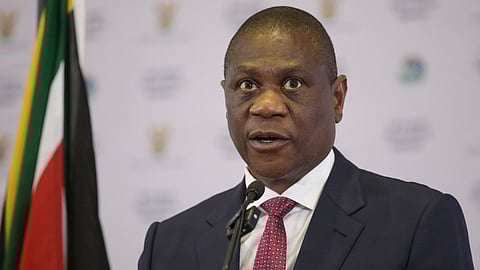
Key topics:Mashatile fined R10,000 for undeclared diamond gift to wifeWhitfield was dismissed for travel without presidential approvalUnequal consequences are questioned for ethical violations in governmentSign up for your early morning brew of the BizNews Insider to keep you up to speed with the content that matters. The newsletter will land in your inbox at 5:30am weekdays. Register here.Support South Africa’s bastion of independent journalism, offering balanced insights on investments, business, and the political economy, by joining BizNews Premium. Register here.If you prefer WhatsApp for updates, sign up to the BizNews channel here..By Kerry Lanaghan.Parliament has fined Deputy President Paul Mashatile R10,000 for failing to declare a diamond gift his wife received from a controversial businessman - just weeks after President Cyril Ramaphosa fired Democratic Alliance (DA) Deputy Minister Andrew Whitfield for travelling abroad without approval. The two incidents, though markedly different in substance, have sparked a broader debate about whether South Africa's executive applies the same accountability standards across party lines.According to a TimesLIVE report, the gift in question, a diamond given by alleged fraudster Louis Liebenberg to Mashatile's wife, Humile, in 2023, was never declared in the confidential section of Parliament's register of members' interests, as required. The DA lodged a formal complaint in March, arguing that Mashatile had violated ethical rules by failing to disclose the gift.Parliament's Joint Committee on Ethics found the deputy president guilty and imposed a fine and reprimand. It rejected Mashatile's explanation that he was waiting for a formal valuation before declaring the diamond. It noted that the stone had only been handed to the National Prosecuting Authority after the DA complaint.DA Chief Whip George Michalakis welcomed the guilty finding. Still, they questioned why a sitting deputy president found in breach of Parliament's ethics code received what he called a "symbolic fine" rather than more serious consequences. "These failures give rise to serious concerns as to why the deputy president continuously fails to declare assets transparently and ethically," he said.The episode follows a broader storm surrounding Mashatile's reported use of a R28 million Constantia mansion, which he recently declared his Cape Town residence. He later clarified that the luxury home was owned by his son-in-law, not by himself or the state.Meanwhile, Whitfield was dismissed on 25 June for travelling to the United States without the president's permission. Ramaphosa, in a rare public statement on the matter, insisted the dismissal was a constitutional prerogative rooted in established rules governing executive conduct. "The blatant disregard of the rules and practices that govern international travel of executive members is a serious violation," Ramaphosa said.The president also noted historical precedent, citing former deputy ministers Winnie Madikizela-Mandela and Nosizwe Madlala-Routledge, who were both dismissed under similar circumstances in 1995 and 2007, respectively.However, the stark contrast in consequences for Whitfield and Mashatile reflects a more profound inconsistency. Whitfield's breach of protocol led to his swift removal, while Mashatile - a far more senior official - remains in office despite an official finding of ethical misconduct. And unlike Whitfield's case, the Mashatile scandal involves ties to a known controversial businessman, a high-value gift, and public doubts over asset declarations.As Parliament heads into its next session, the DA has vowed to press for further disclosures from Mashatile and may table additional questions on the full extent of his financial interests and benefactors. However, with the president remaining silent on the matter of his deputy, concerns are mounting over what critics describe as selective enforcement of ethics in government.For now, Mashatile keeps his job - and Whitfield does not.