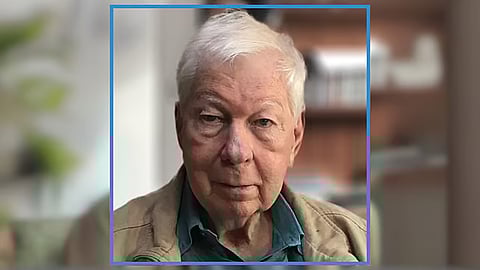
Key topicsRory Stewart exposed the shallowness and cynicism in UK political leadership.His career highlighted deep flaws in the Tory party and foreign policy failures.Despite integrity and expertise, Rory was sidelined by populist, party-first politics. .Sign up for your early morning brew of the BizNews Insider to keep you up to speed with the content that matters. The newsletter will land in your inbox at 5:30am weekdays. Register here.Support South Africa’s bastion of independent journalism, offering balanced insights on investments, business, and the political economy, by joining BizNews Premium. Register here.If you prefer WhatsApp for updates, sign up to the BizNews channel here..By RW Johnson.Rory Stewart was not your average British politician. Coming from a classic upper class background (the Dragon School, Eton, Balliol), as a student he was chosen as a private tutor to Princes William and Harry. (His father, who was very senior in the Secret Intelligence Service, taught Rory fencing and martial arts in Hyde Park.) Rory served as an army officer in the Black Watch, then joined the diplomatic service, serving in Indonesia and Montenegro, and after the invasion of Iraq was the deputy governor of an Iraqi province. He then took leave and, having always been a keen walker – he has walked most of the UK and much of Western New Guinea – he set off on a 6,000 mile walk across Iran, Pakistan, the Himalayas and Afghanistan. This took him over 18 months, walking 20-25 miles a day. He then set up and, backed by King Charles III (whom Rory refers to as “a strong friend”) ran an NGO first in Afghanistan and then in Jordan. Not surprisingly, Brad Pitt bought the film rights for a film about Rory, though it remained unmade. Meanwhile Rory, who speaks eleven languages, wrote several best-selling books about his experiences and also made a number of TV documentaries for the BBC.At the beginning of his latest book (Politics on the Edge – another No.1 best-seller) Rory is a professor at the Kennedy Centre in Harvard but thinking he will return to the UK and go into politics. As a teenager he had been a Labour Party member but had gravitated to the liberal wing of the Tories. He began by getting an interview with David Cameron, then Leader of the Opposition. Cameron was a very liberal Tory so Rory got a shock when he walked through his private office and found it entirely staffed by right wing Old Etonians, Cameron’s (and Rory’s) school mates. Full of earnest desire to do good, Rory talked of his love of country. Cameron looked bored and irritated, clearly annoyed that he’d agreed to this interview. When Rory said he would like to be a minister one day, Cameron gave him a lecture about how being a humble MP was the greatest honour of one’s life and how he, once he ceased to be prime minister, would remain a backbench MP for the rest of his life. In fact, as Rory later noted, Cameron resigned his seat the minute he ceased to be PM and quickly entered the House of Lords.This was the beginning of a long learning process. Cameron was entirely superficial and concerned only with making a good political impression, though in fact he seemed entirely un-interested in any of the issues. Rory had come to the view that the interventions in Iraq and Afghanistan were both disastrous. Cameron clearly didn’t care one way or another but concentrated on “supporting our troops” and waving the flag because that went down well with focus groups.Next came the rather awful business of becoming a parliamentary candidate. The overwhelming majority of those putting themselves forward as possible candidates were people who’d spent some considerable time as Tory city or county councillors. They were local worthies, often with compendious knowledge of the roads, traffic problems and sewage systems of their local town but not necessarily much knowledge of the national affairs they would have to deal with if elected as MPs. Many of them had spent years going from one selection contest to another. And what was more, the selection committees rather expected that sort of person and looked askance at the highly intelligent Rory with his complex background, lack of local roots and strong interest in foreign affairs and defence.Nonetheless, in the end Rory was adopted as candidate for Cumbria, a vast, rural constituency on the Scottish border. This appealed immensely to Rory, who walked and walked around this huge and beautiful area, getting to know it and its people in a way that few MPs could equal. He repeatedly won the seat with record majorities..Read more:.FT: Farage shakes up UK politics as Reform topples Tory and Labour strongholds.Parliament, though, was a major let-down. He was immediately warned that the only road to preferment lay through slavish loyalty to Cameron and his henchman, George Osborne. In fact Cameron and Osborne seemed to be the only people making real decisions. Backbench Tories divided among those who displayed that slavish loyalty and those who had essentially given up, who were deeply cynical and who liked to blather about nothing. Rory’s attempts to discuss policy fell flat: all that other MPs wanted to talk about was gossip about who was intriguing for what position. After a while Cameron came up with a proposal to reform the House of Lords – really in order to dish the Liberals and give a “progressive” impression. As usual with Cameron, it wasn’t clear what he actually believed in, if anything. Like many other Tories, Rory didn’t like the proposal but Osborne came round, demanding loyalty. He specifically warned Rory that if he didn’t vote Cameron’s way, he would get absolutely no promotion for five years. After much thought Rory voted against, Cameron lost and Rory got no promotion for five years.There followed a fiasco of a seminar at Chequers on Afghanistan policy to which Rory, an Afghanistan veteran, was invited. Rory had long thought about the options there and discussed them with the commanding generals. Those who knew agreed that it was hopeless trying to nation-build. But on the other hand only an Allied presence, even if small, was essential to stop the Taliban taking over. So the best thing to do would be to be far less ambitious, do less, but stay involved. Cameron, who had no real experience of Afghanistan, poured scorn on this and said, better to do a lot more and then get out. This just happened to be identical with what Obama favoured. Rory correctly predicted this was bound to fail and cost many unnecessary casualties. But of course Cameron not only got his way but castigated those who had failed to grasp his superior wisdom. Cameron was confident he could get the Afghan and Pakistani presidents to agree by inviting them to Britain. Rory warned they had been fighting one another for thirty years and would never agree. This too was swept aside with jargon about “sustainable development”. It was a wholly dispiriting experience.After this came the first proper Commons debate about Afghanistan where British soldiers were regularly getting killed and injured. The chamber was three-quarters empty and discussion was appallingly jejune and ill-informed. Rory, the only MP who had spent years in Afghanistan, was given just six minutes in which to speak. Then he went to Afghanistan with a party of MPs. They met with the Afghan president who was also the commander of the Afghan army. He told the MPs that “As Rory knows, the entire Western counter-insurgency strategy is a mistake. If I lived in southern Afghanistan, I would join the Taliban”. The tour organizer said it had been a very good discussion, though of course what the president said was quite wrong. Rory then had to write up a report of the visit in which he made clear how completely hopeless and mistaken the government’s strategy was. The government ignored this and talked instead of how its strategy was “showing signs of success”. As we know, the whole Afghan adventure ended in the most disastrous way possible, a monument to the government’s entire refusal to listen and a governance failure on a very large scale.And so it goes on. After he had served his five years’ penance for not doing everything Cameron wanted, Rory became chair of the Defence Committee and then a junior minister in the Department of the Environment, putting him in charge of the national parks, flooding, rivers and forestry. His senior minister was Liz Truss who was even more superficial and cynical than Cameron, but the job suited Rory with his large rural constituency though he was never able to get the government to take adequate measures against flooding which climate change had made a major menace. Then came Brexit: Rory was a Remainer but his constituency wasn’t.Brexit meant the end of Cameron and the rise of Boris Johnson who, Rory knew from school, was a dishonest and irresponsible chancer. Rory was made a minister in the International Development (foreign aid) department by Theresa May. Rory now found himself giving away huge amounts of money (much of it wasted) which contrasted miserably with the humble sums he had tried and failed to get for domestic use. Spotting that one grant to a country he knew would almost certainly get into the hands of the local jihadists, he blocked it – but his civil servants kept finding backdoor ways of re-inserting it simply to show who was boss. In the end the jihadists got the money.Rory very much liked Theresa May for her earnest determination to do her best, but she entirely lacked Cameron’s suave political skills and although her attempt to stay in the common market was the least damaging form of Brexit, it was despised by the now dominant Tory Right. Rory was promoted again, in charge of prisons at the ministry of Justice, where he did excellent work, and was then promoted to Cabinet rank as Secretary of State for International Development. But Theresa May was exhausted and on the way out and the popular favourite to succeed her was Boris Johnson. Rory couldn’t stomach this so he decided to run for the Tory leadership – and thus for prime minister – himself. He had no support from the dominant Brexit wing but ran a sparkling and original campaign, emerging in the polls as a popular favourite almost equal to Boris. Rory made it plain that he would not serve under Boris if the latter became prime minister. But by this time opinion had polarised around the need “to get Brexit done” and Boris played well to that tune, whereas Rory did not. In the end he was squeezed out and Boris came to power, with Rory certain that disaster lay ahead, as indeed it did. He resigned his Cabinet post and his seat and returned to a professorship, this time at Yale – where he still is. The value of Rory’s account of his political career is that it presents a wholly truthful and unvarnished account of how British politics actually works. It’s not a pretty sight. The system relies on its myths, the Mother of Parliaments, the house of Pitt the Younger, Wilberforce, Gladstone, Disraeli and Churchill – and so on. But the modern reality is that it has been successfully gamed by professional politicians who are mainly a cynical and superficial breed. Moreover, looking at the track record of the 21st century, it is impossible to maintain that the system has generated many wise or successful decisions. Meanwhile we have entered the age of populism which has produced the worst and most shallow political leaders (Boris, Farage) that we have yet seen. Perhaps one should add Tony Blair to that list. Gordon Brown, who was by far Blair’s intellectual superior, famously told his civil servants that it was impossible to talk sense about economics to Blair because he was intellectually lacking. “Tony’s so shallow”, Brown said, “that he’s deeply shallow.” But there we are: Blair was a fabulously successful prime minister and party leader, but Brown was not. Similarly, Rory Stewart would have made a splendid prime minister but is now teaching American students instead. And Boris Johnson, who easily won the party leadership but was soon thrown out for cheating and lying, is today still popular with many in the Tory party. Quite clearly the system needs fundamental reform, but the danger is that what it might get instead is Farage’s Reform.