
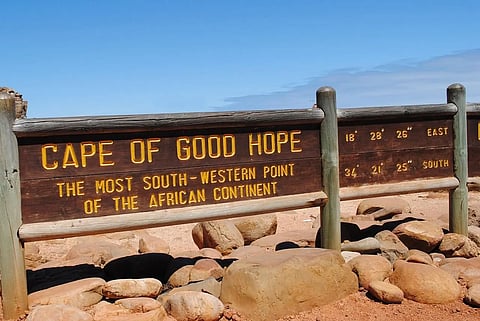
TCS: Cape of Good Hope emerges as vital global oil route amid rising tensions
Key topics:
Cape of Good Hope now handles 9.1M barrels/day, 50% rise since 2022
Major oil flows eastbound to Asia, with 40% of that bound for China
South Africa gains little economically despite strategic global role
Sign up for your early morning brew of the BizNews Insider to keep you up to speed with the content that matters. The newsletter will land in your inbox every morning on weekdays. Register here.
Support South Africa's bastion of independent journalism, offering balanced insights on investments, business, and the political economy, by joining BizNews Premium. Register here.
If you prefer WhatsApp for updates, sign up to the BizNews channel here.
By Econ Desk
The Cape of Good Hope has emerged as the third-busiest sea route for oil transportation worldwide.
This is according to the United States (US) Energy Information Administration (EIA) chokepoint report released this month. It said that approximately 9.1 million barrels per day of crude oil and petroleum products currently pass around the Cape, making up 11% of global seaborne oil trade. This compares to the usual traffic seen in the chokepoints of the Strait of Malacca in south-east Asia, which handles 29% (23.2 million barrels per day), and the Strait of Hormuz, in the Middle East, which accounts for 26% (20.9 million barrels per day).
A chokepoint is a narrow, heavily used sea passage where vessel size restrictions apply. Even a temporary blockage can halt global supply and drive up energy prices. Unlike chokepoints, however, the Cape of Good Hope is an open-ocean route around the southern tip of Africa, making it nearly impossible to blockade in the conventional sense. This makes it the world's default detour when chokepoints further north become dangerous or impassable.
The surge in traffic at the Cape is recent. In 2022, oil flows around the Cape stood at just 6.1 million barrels per day. That number has now climbed to 9.1 million barrels per day, an increase of nearly 50%. This shift was partly driven by the Houthi campaign against Middle East shipping in November 2023.
Read more:

Most of the crude oil that rounds the Cape moves eastbound. Of the total about 5.2 million barrels per day are heading to Asian markets, with more than 40% of this bound for China alone. The oil comes primarily from the US (23%), West Africa (28%), and South America and Mexico (29%). Despite this surge in traffic, South Africa draws almost no economic benefit from it. The country's ports, ranked the least efficient in the world by the World Bank, offer vessels little reason to stop, and most pass without docking, refuelling, or refitting.
South Africa's geographical location is also important, not only from an oil perspective, but also in global trade. According to IMF PortWatch data, the Strait of Hormuz averaged more than 153 vessel transits per day in the weeks before the conflict between Iran, Israel, and the US that erupted on 28 February 2026. By 8 March, this number had dropped to just two, a decline of over 90%. At the same time, Cape transit calls held steady at a seven-day average of 78 per day. This means more commercial vessels now round the southern tip of Africa each day than pass through the world’s most important oil chokepoint.
Bheki Mahlobo, economics and policy editor of The Common Sense, said, "South Africa is more strategically important than its own policymakers realise. The Cape currently handles more daily vessel traffic than the Strait of Hormuz. While these volumes will likely normalise once the current conflict ends, South Africa’s geographic advantages have made the country more important on the global stage. Prioritising port efficiency and improving trade relations with the US could unlock the investment needed to push GDP growth toward the 4-5% levels seen in other emerging markets."
This article was first published by The Common Sense and is republished with permission.