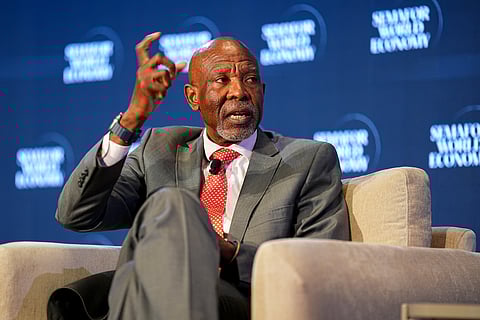
This article was first published by The Common Sense.When the Reserve Bank's Monetary Policy Committee held interest rates at 7.00% last week, defying near-universal expectations of a hike, the rand punished the decision within hours, shedding almost 3% of its value. The Common Sense Editorial Board, led by Dr Frans Cronjé, argues below that the mismatch mattered: US Fed chair Jerome Powell's hawkish testimony had strengthened the case for a South African hike; inflation still sits at 5.0% against a 3.0% target; and bond markets had already priced in tighter policy. The episode is a real-world preview of what happens when SARB credibility slips — and a warning for those pushing to strip the bank of its independence..From The Common Sense.When the Monetary Policy Committee of the South African Reserve Bank (SARB) met last week, markets and observers expected a 25-basis-point (0.25 percentage points) hike in South African interest rates, from 7.00% to 7.25%. There was good reason for that, but the bank instead opted to hold rates steady – and the country was punished as a consequence.The week prior, the governor of the United States (US) Federal Reserve, that country’s central bank, had made very strong comments to Congress that inflation in America was not sufficiently under control and that America’s economy and labour market were performing strongly. High inflation raises the odds of future US rate hikes, while strong growth and job numbers suggest America could withstand them.The rate outlook for America matters a lot to South Africa, as potential American hikes force investors to consider what is called the interest rate differential, or the difference between US and South African interest rates. The wider that differential is, the more enticing it is to invest in rand-denominated things – as you are getting more interest in South Africa than you would in America. The more that differential narrows, the less enticing a bet on South Africa becomes, as South Africa is seen as a very high-risk bet given its volatile politics, low growth, and counterproductive expropriation and empowerment policies. Demand for the rand determines its price. The more demand there is, the higher the price, which means a stronger currency. If it strengthens, South Africans pay less for imported goods, and especially fuel, which feeds through to all consumer prices. If it weakens, they pay more.The argument by populist and leftist politicians is that hiking rates hammers consumers. This is one of the key arguments behind a drive to nationalise the SARB – so that politicians can force it to cut rates. But if it did so, the differential would narrow and the rand would weaken. In the 12 or so hours after the SARB’s hold decision last week, the rand gave up almost 3.0%. The lesson is that the market will do to the economy what the bank refuses to do with interest rates – and will likely do so to a punitive degree.Also to be factored into last week’s decision is that South Africa’s inflation number, at 5.0% in June, was still well above the bank’s own target of 3.0%. A key mandate of the bank is to fight inflation by raising rates, on the theory that raising rates puts the brakes on demand for money, which tames inflation (in addition to the effect of a strengthening currency). If the market loses faith that the bank will act in line with that mandate, then trust in the bank is eroded and the price will be paid through a weakening currency.Markets had also signalled to the bank, both in terms of what economists were saying and what was happening in the bond market, that a hike was expected.What are these “markets”?The market here refers to the bond market, which is the market in which the government borrows money (as a consequence of its counterproductive investment policies South Africa’s government is forced to borrow a lot of what it spends every year). It issues bonds to investors, usually big financial institutions, which buy the bonds from the government, giving it money in exchange. The investors are paid interest on the money they have paid to the government. When investors think future rates may rise, they move to sell some of their bonds in order to free up cash to buy the higher-yielding bonds (higher interest rate) they think will come through a rate hike. As a consequence, some bond prices begin to fall. That was evident in the South African market in the run-up to the rate decision.Over the past year, the US dollar index, which measures the strength of the US dollar, has gained around 5.0% (which should have seen the rand weaken by a similar degree), while the rand strengthened by around 5.0% – amounting in practice to a 10.0% swing in favour of the South African currency. That has been a source of great relief for households and businesses, as it means that fuel prices were substantially lower than they might otherwise have been..Read more:.US banking giant drops its bet on the Rand after SARB's no change on rates.Trust in the central bank to make predictable decisions in defence of the currency was an important ingredient in that – and that trust was betrayed by the bank’s decision last week. Should that occur again, let alone repeatedly, or should the bank be placed in the hands of people who would take advice from populist politicians, the consequence will be that investors will increasingly need to hedge their bets against South Africa. As they do so, the currency will weaken and may do so dramatically, raising costs in the domestic economy and fomenting political instability..This article was first published by The Common Sense and is republished with permission..Sign up for your early morning brew of the BizNews Insider to keep you up to speed with the content that matters. The newsletter will land in your inbox every morning on weekdays. Register here.Support South Africa's bastion of independent journalism, offering balanced insights on investments, business, and the political economy, by joining BizNews Premium. Register here.If you prefer WhatsApp for updates, sign up to the BizNews channel here.