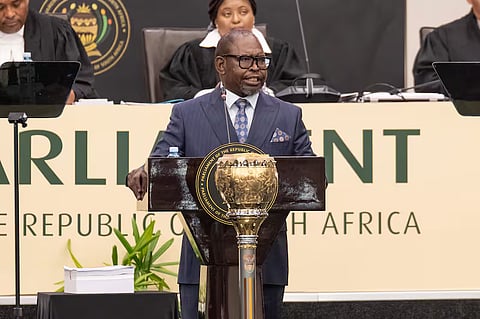
As the world grows more uncertain, clarity matters more than ever. BNC#8 brings together some of the smartest and most experienced minds to help you cut through the noise and navigate the turbulence with greater confidence. Tickets are selling out fast, with only 40 left. Don’t waste time, book your place at BNC#8 by clicking here or on the image below..Key topics:Debt stabilisation and disciplined 2026 Budget signal fiscal progress.Sin tax hikes aligned with inflation to protect legal businesses.Stronger enforcement to curb illicit trade and protect revenue base..Sign up for your early morning brew of the BizNews Insider to keep you up to speed with the content that matters. The newsletter will land in your inbox every morning on weekdays. Register here.Support South Africa's bastion of independent journalism, offering balanced insights on investments, business, and the political economy, by joining BizNews Premium. Register here.If you prefer WhatsApp for updates, sign up to the BizNews channel here..By Ayanda Sakhile Zulu*.Notwithstanding the longstanding concerns about revenue, spending, and public finances, Finance Minister Enoch Godongwana’s 2026 Budget speech is a good one. For a country facing high debt and slow growth, it shows some level of discipline and foresight. Government debt is projected to stabilise for the first time in nearly two decades, and revenue and expenditure adjustments appear measured and predictable. That gives markets and businesses some certainty that has often been missing in previous budgets. While not perfect, the Budget deserves recognition for restraint in areas where overreach could harm the economy.One of the most notable shifts concerns sin taxes. For the first time in a long time, increases to alcohol and tobacco excise duties were kept in line with inflation, rather than above it. This is important. Years of above-inflation hikes put pressure on legal operators and pushed consumers toward illicit alternatives. Moderating the increase protects formal businesses and safeguards a source of tax revenue that is otherwise at risk. It may seem modest, but in context it is a meaningful first step..Read more:.South Africa to introduce binding fiscal rule by October to curb debt.The Minister also addressed illicit trade, including plans to strengthen enforcement and improve monitoring. This shows recognition that taxation alone does not work. Heavy excise hikes over the years have demonstrated that when price is the only tool, products become unaffordable and illegal operators expand. The combination of moderated taxes and enforcement is a clear signal that a broader approach is necessary.At the same time, the historical impact of sin taxes must be remembered. Above-inflation increases contributed to the growth of the illicit market. Legal operators were squeezed and untaxed alternatives became more attractive. Future tax policy cannot repeat that mistake. Even modest increases, if not integrated with enforcement and market realities, risk doing more harm than good. Excise duties alone are not enough.Some have argued that the Minister should have gone for higher taxes to reduce consumption. The data does not support this. Consumption is largely inelastic. During the COVID-19 alcohol bans, overall consumption did not fall proportionately and much of the market moved to informal or illicit channels. Making legal products more expensive simply drives people underground, while legal operators suffer and government revenue shrinks. Illicit traders pay no taxes, so harming the formal sector undermines the fiscal base. History and evidence show that heavy excise increases are counterproductive.The moderation in this Budget is pragmatic. It protects legal operators while acknowledging that taxation has limits. Law enforcement and monitoring are central to any strategy against illicit trade. Keeping excise increases in line with inflation is a necessary correction after years of above-inflation hikes. The challenge now is to integrate tax policy with enforcement and broader market measures. Without that, efforts to curb illegal trade will remain futile.In short, the Budget marks a notable shift. On sin taxes, moderating increases is welcome. It recognises that heavy taxation alone does not reduce consumption and that illicit trade must be addressed through a coordinated strategy. The Minister has taken a first step. The hope is that future policy continues to acknowledge the limits of taxation, integrates enforcement effectively, and avoids returning to above-inflation hikes that created market distortions in the past..*Ayanda Sakhile Zulu holds a BSocSci in Political Studies from the University of Pretoria and is a Policy Officer at the Free Market Foundation.