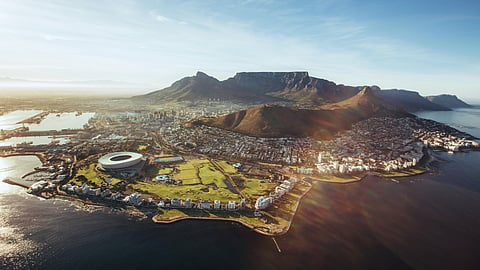
Key topics:Cape Town CBD attracts R9bn in property investment despite SA slumpResidential and mixed-use projects drive a youth-focused property boomOffice vacancies drop to 9.4%, defying "death of the office" narrative.Sign up for your early morning brew of the BizNews Insider to keep you up to speed with the content that matters. The newsletter will land in your inbox at 5:30am weekdays. Register here.Support South Africa’s bastion of independent journalism, offering balanced insights on investments, business, and the political economy, by joining BizNews Premium. Register here.If you prefer WhatsApp for updates, sign up to the BizNews channel here..BizNews Reporter.If you spend enough time looking at South Africa’s macro-economic indicators, you’d be forgiven for wanting to hide under the bed. We have become conditioned to a narrative of stagnation: tales of urban decay, capital flight, and the slow collapse of infrastructure in our major metros. It is the noise that dominates SA’s daily news cycle.But look past the headlines and drill down into the hard data coming out of the Mother City, you find a story not just bucking the national trend, but actively rewriting the script on urban resilience.The release of the State of Cape Town Central City Report 2024 (embedded below) confirms what many in the BizNews community have sensed for some time: the Cape Town Central Business District (CBD) has become an anomaly in the South African context. While other city centres struggle to retain tenants, battling the twin demons of grime and crime, Cape Town’s CBD has attracted a conservative estimate of R9 billion in property investment over the past year..Read more:.While South Africa's CBDs fade, Cape Town’s inner city champions a property rebirth.The numbers in the report tell a story of extraordinary confidence. At last count, there were 27 developments either completed, under construction, or in the planning phase within the CBD’s tight 1.6km² footprint. This is not merely maintenance of existing stock; it is aggressive expansion. As Rob Kane, chairperson of the Cape Town Central City Improvement District (CCID) and CEO of Boxwood Property Fund, notes, the sight of yellow cranes over the CBD is extraordinary for a country grappling with a tepid economy. Capital is cowardly; it flees uncertainty. In Cape Town, it is putting down roots.So, what makes the Mother City so different?The answer appears to lie in the boring but essential mechanics of governance. Premier Alan Winde and Mayor Geordin Hill-Lewis attribute this success to a 25-year public-private partnership between the City and the CCID. This collaboration has allowed the CBD to resist the urban decay that has afflicted practically every other metro in South Africa. As Hill-Lewis rightly points out, business owners vote with their feet. In Cape Town, high occupancy rates suggest they are voting to stay.The composition of this investment is shifting, too, reflecting a global trend toward mixed-use "15-minute cities". Residential developments now dominate the pipeline, accounting for 44% of the projects. This is fueling a property boom that seems immune to the gravitational pull of high interest rates. The median price of sectional title properties in the CBD surged by 16.3% in 2024 to R1.85 million.Driving this demand is the phenomenon of "semigration." A recent survey indicates that 57% of CBD residents have moved from elsewhere in South Africa. Interestingly, the age profile is skewing younger, with the 18-24 demographic becoming the most significant cohort for the first time. These are the digital nomads and young professionals drawn to a lifestyle where the commute is a walk, not a crawl through traffic.On the commercial front, the data defies the popular "death of the office" narrative. While office vacancies are a headache globally, Cape Town’s CBD office vacancy rate has dropped to 9.4%—significantly healthier than the double-digit vacancies seen in nodes like Sandton or Durban..Read more:.FT: How the world sees SA: Are too many people moving to Cape Town?.Underpinning all of this is the return of the international visitor. Cape Town International Airport processed a record 3.08 million two-way international passengers in 2024. The flagship development for 2025 epitomises this renewed energy: the R1.3 billion transformation of the former Christiaan Barnard Hospital into "City Park," which will house the Mama Shelter hotel.Cape Town’s CBD has effectively decoupled itself from the national malaise. It is a testament to what happens when the private sector finds a willing and capable partner in local government. For the rest of South Africa, the lesson is stark but hopeful. Urban decay is not inevitable. With the right mix of safety, cleanliness, and governance, capital does not flee—it builds..Download and read the full State of Cape Town Central City report below