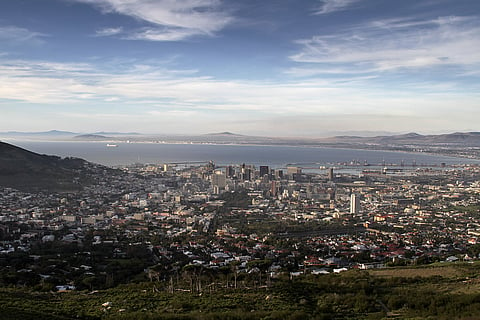
Key topics:Cape Town property surge sparks tax dispute with SAPOA.New city rates include sanitation, water, and cleaning charges.Court to hear multiple challenges to 2025/26 “pro-poor” budget..Sign up for your early morning brew of the BizNews Insider to keep you up to speed with the content that matters. The newsletter will land in your inbox at 5:30am weekdays. Register here.Support South Africa’s bastion of independent journalism, offering balanced insights on investments, business, and the political economy, by joining BizNews Premium. Register here.If you prefer WhatsApp for updates, sign up to the BizNews channel here..By Prinesha Naidoo and Ana Monteiro.A surge in property values in Cape Town, Africa’s most expensive city for real estate, has helped spark a months-long tax dispute between a body representing land owners and local authorities.The Western Cape High Court will from Tuesday hear an application from the South African Property Owners Association — whose members include some of the nation’s top banks, commercial land owners and developers — challenging the legality of the City of Cape Town’s rates on properties for the year through June 2026. The charges form part of the city’s so-called ‘Invested in Hope’ budget. Sapoa has “serious legal concerns” with the budget, including the introduction of a city-wide cleaning tariff, a new basic fixed sanitation charge linked to property values, and changing the fixed water charge to one linked to property values, it said in an emailed statement..Read more:.Cape Town’s 30% levy hike sparks public fury ahead of 2026 local elections.Cape Town, led by the Democratic Alliance since 2006, ranks as the country’s best-run major metropolitan and an influx of people into the picturesque coastal city has helped spur a 160% increase in property prices since 2010, according to Statistics South Africa. Values in Johannesburg — Africa’s richest city — have risen by less than half of that over the same period. Wedged between Table Mountain and the sea, and in close proximity to wine farms, Cape Town has long been a favourite base for the wealthy seeking to enjoy its warm weather and outdoor-lifestyle offerings. It has more recently also drawn middle-class people from other South African cities, with 100,000 families moving to the metro in the last two years alone. The council, which plans to invest 40 billion rand ($2.3 billion) on infrastructure over three years, has argued that the charges are necessary to fund upgrades and new projects and the costs should be borne by all ratepayers. Mayor Geordin Hill-Lewis has previously labeled Sapoa’s attempt to challenge the tariffs as an attack on Cape Town’s “pro-poor budget.” .The city delayed implementing the levies for business and commercial properties until July 1, 2026, but they are already applicable for those that are vacant and use for residential purposes.The Cape Town Collective Ratepayers’ Association and the South Africa First Forum have both been admitted as friends of the court on the case.Afriforum, a White Afrikaner rights group, has launched a separate application against the taxes that will be heard simultaneously with Sapoa’s, the property organisation said. .© 2025 Bloomberg L.P.