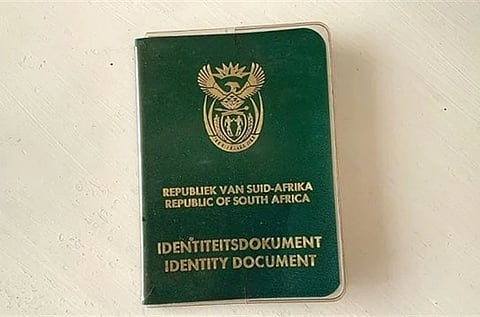
Key topics:South Africa to stop issuing green ID books from 2026.4.4m adults lack any ID, delaying smart ID rollout.Smart IDs and digital MyMzansi IDs planned by 2027..Sign up for your early morning brew of the BizNews Insider to keep you up to speed with the content that matters. The newsletter will land in your inbox at 5:30am weekdays. Register here.Support South Africa’s bastion of independent journalism, offering balanced insights on investments, business, and the political economy, by joining BizNews Premium. Register here.If you prefer WhatsApp for updates, sign up to the BizNews channel here..By Myles Illidge.Minister of Home Affairs, Leon Schreiber, wants South Africa to stop producing new green ID books from 2026, and the document will no longer be a valid form of ID once everyone has access to smart IDs.The minister’s plans, along with the plan to launch a digital ID through the MyMzansi platform by 2027 at the latest, will usher in a new era for identity documents in South Africa.However, his department faces a significant challenge, considering the minister recently revealed that roughly 4.4 million South Africans over the age of 16 don’t have a green ID book or smart ID card.This was revealed in response to Parliamentary questions from EFF MP Nonhlanhla Mkhonto. Schreiber said the 4.4 million figure applies to all demographics within the country.“According to the National Population Register, there is a total of 4,432,923 South Africans who are 16 years and above who have not been issued with either a green ID book or a smart ID card,” he said..Read more:.South Africa plans phase-out of green ID books within two years.The revelation highlights a significant gap in access to the basic service of acquiring an ID. Residents across the country rely on IDs to open bank accounts and get jobs or grants.These 4.4 million South Africans must now wait for access to smart ID cards to be expanded to their areas. This issue is also a significant roadblock in Home Affairs’ plan to invalidate green ID books.The Department of Home Affairs plans to invalidate the green ID book once all South Africans have access to the newer smart ID card.Asked about his department’s plan to intervene in the challenges many South Africans face, Schreiber said the Home Affairs @ Home programme is designed to expand access.Moreover, applicants won’t have to visit Home Affairs branches for routine services, as smart ID and passport services will be available through 1,000 bank branches and banking apps in the future.“This model will reduce the number of routine applicants visiting offices,” said Schreiber.“This will free up much-needed capacity within the department to become a more mobile organisation that systematically documents all undocumented South Africans.”It remains unclear whether these 4.4 million South Africans without access to ID services form part of the 16 million South Africans who still need to transition to the smart ID card.At least five years of valid green ID books.Various South African politicians, including President Cyril Ramaphosa, communications minister Solly Malatsi, and Schreiber, have set ambitious timelines for new ID projects.Schreiber wants the country to stop producing new green ID books from 2026, and as soon as all South Africans have access to smart IDs, the government will invalidate the green ID book.At the same time, Ramaphosa and Malatsi want to roll out digital IDs from latest 2027 through the MyMzansi platform.However, both of these goals could be a significant challenge, considering there are still roughly 16 million South Africans who need to migrate to smart ID cards.Home Affairs said its new partnership model with banks significantly expands its footprint at no additional cost to the department..Read more:.UPDATE: Capitec backs Home Affairs' ID fee hike, absorbs costs to shield clients amid TymeBank clash.“This expansion was designed to accelerate the phase-out of the 16 million remaining green ID books,” it said.Based on the Home Affairs-managed Government Printing Works’ recent annual production figures, citizens by birth, naturalised citizens, and permanent residents have at least three to four years to get smart IDs.Government Printing Works has a practical production capacity of three million cards per year, with an expected capacity of four million.It produced 3.6 million smart IDs in the last financial year, and at its maximum capacity, it can produce up to five million cards annually.If the department’s service expansion to more bank branches boosts smart ID production to the maximum in the current financial year, 11 million green IDs will remain by March 2026.If the maximum rate of production were to continue in the 2026 and 2027 financial years, there would be one million green ID books remaining by March 2028.Therefore, at the Government Printing Works’ maximum production rate, the last remaining green ID books will only be replaced in 2028..This article was first published by MyBroadband and is republished with permission