
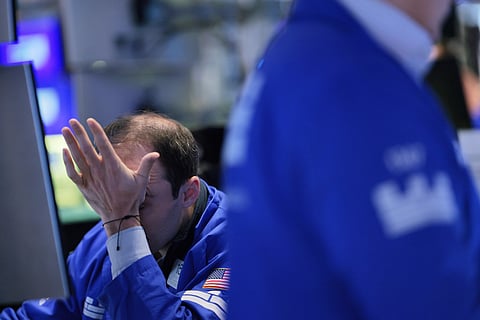
Why investors are driving at 150km/h into a financial fog: Sean Peche
Sean Peche drove a hired car through rain, fog and roadworks at night. He stuck to the slow lane, 20km/h under the limit, and let everyone pass. Markets, he argues, look just as treacherous. Valuations are stretched. US bond yields top 5%. Wars rage. Yet money keeps flooding into US index funds. For South Africans piling into offshore trackers, the Ranmore portfolio manager poses a pointed question: which risk are you really taking?
By Sean Peche
The driving conditions were dangerous as we set off for the weekend in our hired car.
I was driving on:
unfamiliar, busy roads
at night,
in rain, fog, and warnings of wind
with roadworks
and a windscreen wiper on the “wrong” side…
Now I’m a very cautious driver because I think about risk management most of the time.
And regularly ask my Uber drivers to slow down in return for a larger tip ..
Because the stats for slow driving are compelling - for every 10km/h of increased speed, the risk of dying in a crash doubles, in normal conditions.
So that night I drove in the slow lane, ~20km/h below the speed limit, and didn’t care how many cars passed me.
All I wanted was to travel safely - better a few minutes late than “dead on time” as the saying goes.
Driving slower in dangerous conditions is obvious to me, as I'm sure it is to most.
But then why aren’t we doing that with our investments?
Because we all know that the "conditions" out there are “dangerous”:
extreme concentration
high valuations
US bond yields over 5%
high oil price
multiple wars
And yet Bloomberg tells me nearly $300bn has flowed into S&P500/Total market ETFs this year!
So it seems we’re not slowing down, we're “accelerating into the turns”!
Maybe the approach, “if everyone else is driving at full speed in dangerous conditions, I better join them. Don’t want to risk under-performing …”
Except that driving fast in dangerous conditions is when accidents happen.
And yes, we all want to outperform.
But with how much risk?
Now you get relative risk and absolute risk?
If you’re driving as fast as everyone else, you’re taking no relative risk.
But if everyone is driving at 150km/hr, you’re sure as heck taking massive absolute risk.
Which risk do you want to assume?
At Ranmore we focus on absolute risk because we don’t want to risk crashing, it's no consolation to us if we all crash together.
If you’re wondering how much risk your fund manager is taking relative to the returns you’ve been receiving.
Have a look at your fund’s risk tab on Morningstar’s website.
They categorise relative Risk and Return in a nice, simple graphic.
Which compares the level of returns vs the level of risk taken over various time periods.
For absolute risk, you can see drawdowns and negative capture ratios.
Drive carefully, it’s wet out there.
*Sean Peche is a Portfolio Manager at Ranmore Fund Management Ltd.

Disclosure:
This is not advice, do your own work
The content of this marketing material is provided for information purposes only. It does not constitute or form part of any offer to issue or sell, or any solicitation of any offer to subscribe or purchase, shares, units of other interests in investments referred to herein. Past performance does not predict future returns. Capital is at risk.