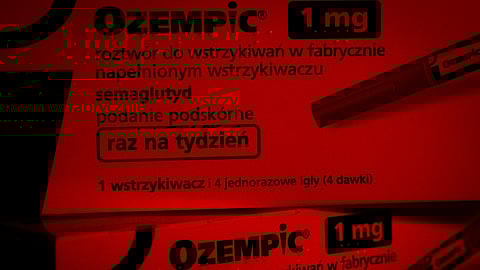
This is the second piece published through BizNews's Commissioning Fund - a mechanism that lets us pay top-tier writers properly for the time and scrutiny a story like this demands. Unfortunately, the brutal economics of online publishing prevent articles like this from being done. Investigative journalist Marika Sboros, best known for her books and expose’s in the medical sector, spent weeks unpacking a Gauteng High Court judgment against iDexis/Sentra Pharmacy, uncovering a R50-million-a-month compounded-semaglutide operation, a two-year regulatory lag, and questions still trailing doctors and media figures caught in its orbit. If you're in the BizNews tribe and want to see more journalism like this - or want to help fund it - email me directly: alec@biznews.com..By Marika Sboros."Peptide" is one of those words doing massive work in medical marketing right now. It is sold in everything from prescription injectables for conditions such as obesity and type 2 diabetes, to skincare serums promising to "restore youthful vitality".It lies at the heart of a Gauteng High Court judgment handed down on June 22.At its centre is semaglutide, a peptide (a short chain of amino acids, one of the body's basic building blocks). It is the active ingredient in Novo Nordisk's blockbuster weight-loss drugs, Ozempic and Wegovy, which a Pretoria pharmacy and pharmacist are accused of copying.This is not a story about one pharmacy and pharmacist. It’s about what happens when a fashionable medicine category outruns the regulators meant to police it.Novo Nordisk brought the case against iDexis (Pty) Ltd, trading as Sentra Pharmacy, its pharmacist-director, Ruaan Louw, and co-respondent regulators, the South African Health Products Regulatory Authority (SAHPRA) and South African Pharmacy Council (SAPC).The court granted an interim order stopping iDexis and Louw from manufacturing, supplying or marketing semaglutide-based products, pending further investigation.Novo originally brought the application on an urgent basis in December 2024. Procedural delays, largely raised by iDexis, meant it was not heard until June 2026.Novo's commercial interest in this case is real. No patent holder objects to a cheaper, more successful rival on principle alone. But that is not the tale the evidence in this judgment actually tells.Where things stand nowSAHPRA formally recalled iDexis's compounded semaglutide, tirzepatide (another peptide) and combination products on May 22, the day after its enforcement notice. The recall was a Class I, Type A, SAHPRA’s highest category.iDexis disputed the findings publicly days later. By late June, Business Day reported that iDexis had not issued a compliant recall notice. Instead, iDexis sent pharmacies a notice describing its semaglutide as merely “out of stock”. Marketing manager Niki Naudé called the notice an “operational communication”, not an admission of any “defect, illegality or wrongdoing”.That non-compliance is why regulators – SAHPRA, the SAPC and, for the first time in this case, the Health Professions Council of South Africa (HPCSA) – escalated with a rare joint statement on July 8, SAPC CEO Vincent Tlala told Reuters. SAHPRA and the SAPC police products and pharmacies; the HPCSA regulates doctors' conduct, including how they may lawfully prescribe.The statement warns that any professional who prescribes, dispenses or keeps stock of the recalled products faces disciplinary action, and would be "knowingly... endangering the health of the public".Regulators are, evidently, watching the demand side of these peptides, not just the pharmacy that supplied them.Section 14(4) of the Medicines and Related Substances Act allows a pharmacist to compound a bespoke medicine for a single patient on prescription in a limited quantity. That’s an exemption built for genuine, one-off, clinical need. It was not meant to be a business model.Patents spotlightedAccording to Judge Petrus van Niekerk’s judgment, iDexis’s court papers put its sales volume at roughly 84,500 units of compounded semaglutide a month. That’s more than its combined South African sales of Ozempic and Wegovy, and more than sales of Eli Lilly's rival drug, Mounjaro, whose active ingredient is tirzepatide, Novo told the court.Novo's semaglutide patent expired in India and China on March 20, 2026, triggering a flood of cheap synthetic semaglutide from newly unrestricted Asian manufacturers. Its foundational compound patent lapsed in South Africa on the same date, though separate patents on injection devices and specific uses run further.That global glut may help to explain how iDexis was able to scale to 84,500 units of compounded semaglutide a month so quickly. Raw material once tightly controlled suddenly became cheap and widely available worldwide, not just in SA.Media reports have calculated the monthly value of this volume of iDexis's production at around R50-million – a hefty figure absent from the court record. Louw, iDexis's sole director, puts a larger number on its overall reach. In media comments, he said iDexis had processed prescriptions for more than 200,000 patients cumulatively since it began, working with around 3,000 doctors and pharmacies nationally.Novo's founding affidavit discloses a company search that found three entities bearing some form of the iDexis name, all controlled by Louw, according to the judgment. What iDexis was actually selling changed as the case went on, at least on the judgment's telling.Same but different …The judgment notes that iDexis's first answering affidavit, filed January 2025, claimed that its semaglutide was not merely comparable to Ozempic's, it was "identical", backed by two commissioned lab reports citing the same 31 amino acids in the same sequence.That claim had quietly shifted by its revised answering affidavit in February 2026. The new defence, built on a joint report from iDexis's own experts, conceded that semaglutide made by solid-phase peptide synthesis "should be classified as synthetic peptides". That’s the opposite of a biological product and of "identical".Louw kept arguing that his product was not chemically synthesised "until constrained to concede" otherwise, as the judgment noted. It doesn't take a chemistry degree to see what happened there.iDexis's own experts had already made Novo's argument for it. Section 14(4) requires the active ingredient to be the same, not merely similar. On iDexis's own paperwork, it was not the same.After all, a counterfeit handbag can share a silhouette, logo and price tag with the original and still be stitched from entirely different materials in an entirely different factory, with no way of knowing until it falls apart.The judgment records that iDexis refused throughout to disclose the source of its semaglutide. Louw told Business Day that the raw material came from a "traceable manufacturer", arrived with certificates of analysis and was tested locally before compounding. That's his disputed account. No one outside iDexis has verified it, which is the point of a registration system.Compounding is meant to be temporary. Compounded medicines skip the long stability testing needed to earn a proper expiry date. The joint SAHPRA/SAPC inspection of iDexis's Silverton premises on May 11, 2026, found that the company was assigning a six-month expiry to its products. That’s a commercial shelf life for a product with no infrastructure to justify one.Pharmacovigilance systems lackingThe same inspection found no HVAC (heating, ventilation, air-conditioning) system for sterile manufacturing, no batch records matching what was produced, no retention samples and no pharmacovigilance system for tracking adverse reactions.Inspectors were told on the day that nothing had been compounded, only to find labelling and packaging underway right next door.SAHPRA's enforcement notice, quoted in the judgment, records inspectors finding illegal compounding of Schedule 4 substances, "specifically Semaglutide, Tirzepatide, and a combination product containing both", without valid prescriptions and supplied to pharmacies and practitioners who did not hold dispensing licences.No published clinical data support combining these two molecules in a single injection.SAHPRA head of regulatory compliance, Daphney Mokgadi Fafudi, named in that notice as one of the inspectors in the raid, later told Business Day that no import authorisation exists for the ingredients found. And that a doctor's prescription does not retrospectively legalise an unapproved substance.Patients reported reflux, nausea, constipation and headaches, SAHPRA said. A separate joint SAHPRA-SAPC statement additionally referenced hospitalisation.That should surprise no one. Two approved compounds went into one syringe with no stability testing, no quality control and no system to catch what happened afterwards.Van Niekerk’s judgment reveals two distinct regulatory failures wearing one blurred acronym: SAHPRA and the SAPC regulate the product and the pharmacy – registration, manufacturing standards, compounding licences.The recent recall and disciplinary warnings were not the first sign of regulatory lag here. Despite being cited as respondents, despite Novo having complained to SAHPRA in early 2024, and despite their own inspection finding exactly these violations, both SAHPRA and the SAPC filed no papers and did not appear at the hearing. It took until May 11, 2026 – nearly two years later and days before the matter reached court – for the inspection to happen.SAHPRA has started catching up. In March 2026, it published draft guidelines on synthetic peptides. Belated is still the word.Caught in the woodsOf the roughly 3,000 doctors and pharmacies that iDexis said it supplied nationally, Novo singled out one in its own court papers: Dr Tommie Smook's Bloemfontein-based practice, RxME/Drs Smook & Partners. At the June 10 hearing, Novo cited Smook's own records to argue the scale that iDexis had reached: a single client with around 41,220 patients, more than 40,000 by its own account. Neither RxME nor Smook appear anywhere in the judgment itself, and no finding was made against him or any other doctor. Yet Smook's prescribing model appears exactly what HPCSA's telehealth rules exist to catch.Nothing rules out that scrutiny landing on him next. Nor is he the only doctor of those 3,000 implicated by scale. None is out of the woods. And whether any will face the same scrutiny is a question this judgment does not answer.Novo's court papers claim that iDexis supplied its product to Drs Smook & Partners' patients for R1,250. That’s cheaper than Novo's own products, which start at R1,438 a month on the Medicine Price Registry. Patients buying through Medi-Lean, a separate operator, paid upward of R4,312.Some paid less than Novo's price, others more. There's no single price story here, and neither does it excuse what was actually in the vial.Smook disputes that iDexis ever supplied his practice. His lawyer, Andrew Venter, told Rapport that medicines for Smook's patients were compounded at a licensed Cape Town facility, not the raided Pretoria pharmacy. He also claimed that Smook was a victim of a smear campaign, with fraud complaints already filed with police.The day after SAHPRA's raid, Smook and partner Suzé Steyl were reportedly detained at OR Tambo Airport, returning from China. Whatever the explanation, the timing – raid, then airport stop – leaves questions unanswered.Rapport also reported that celebrities have promoted Smook's compounded product by referring followers to his practice, and separately, that Nuuspod presenter Izak du Plessis and other Afrikaans media figures received promotional arrangements worth up to R300,000.Du Plessis has responded publicly, dismissing its significance without denying it existed. KykNET pulled the planned ninth season of its weight-loss series, Slank, shortly before its July 2026 premiere. Smook was its headline expert and sponsor.On the interdict’s other sideThe interim interdict solves the immediate legal problem but does nothing for patients left to source their compounded medicine elsewhere.A Gauteng GP (who wishes to remain anonymous and whose name is known to BizNews) does not expect many of these patients to return to a registered, monitored product. “A good number will go sideways into an already-thriving grey – or more likely, black – market of imported powders sold peer-to-peer over WhatsApp and Instagram, with no clinical oversight,” he says.He worries that shutting down one visible, licensed, non-compliant operation does not make demand vanish. It just sends it somewhere with even less oversight than iDexis had.He also worries about the breakdown of "synchronous medicine" (real-time, face-to-face doctor-patient contact) and the growth of the "asynchronous", telehealth alternative. He compares it to "Uber Eats medicine" with artificial intelligence (AI) on the menu.The GP is a big fan of AI and says it can triage, monitor, remind, even diagnose. What it can't replace, he says, “is the moment where doctors are actually looking at patients and responding to what's in front of them."That's not old-fashioned. That's medicine." South Africa is not the first country with rushed-questionnaire, automatic-prescription telehealth models colliding with the law. In the US in November 2025, a federal jury convicted Done Global's founder, Ruthia He, and clinical president Dr David Brody over a scheme distributing more than 37-million Adderall pills worth over $100-million. Brody signed off on close to 400,000 pills for patients he'd never evaluated face-to-face. Ruthia He was sentenced on July 7 to six years, Brody to two and each fined $1-million.The drug changes. The business model does not change.What the judgment actually showedThe South African court's language was unusually blunt for a civil judgment. Van Niekerk found that iDexis and Louw had shown "callous disregard" for patient safety. His judgment ordered punitive costs on the attorney-and-client scale, holding Louw personally, jointly and severally liable.The judgment also recorded that iDexis had never disclosed being under business rescue since May 2025, or that the South African Revenue Service (SARS) was pursuing it for more than R32-million. The court found that these facts should have been disclosed but were not.iDexis and Louw sought punitive costs against Novo, accusing it of dishonesty and dressing up self-interest as public-spiritedness. Van Niekerk dismissed that outright, noting that Novo had itself been through the stringent process it was now trying to force on iDexis.Novo's commercial interest is real, as I mentioned at the beginning. But the judgment leaves a more interesting question open: why did an unregistered product with no pharmacovigilance system reach this scale before any regulator walked through the door?The interdict granted is interim, pending a review that neither SAHPRA nor SAPC has completed. Whatever comes of it, the real failure is not a patent holder's lawsuit. It is the years it took to get regulators to do the job they had the power to do.Novo Nordisk, Ruaan Louw, iDexis, SAHPRA, SAPC, Tommie Smook, RxME, kykNET and Izak du Plessis were emailed timeously for comment. Only SAPC responded before publication (12 July 2026), requesting more time. If received, its response will be noted..iDexis responded on July 14, with a public statement to practitioners, signed by managing director Ruaan Louw, via marketing manager Nikki Naudé. Louw disputes several details in media reports. He says that the affected products were "voluntarily handed" to inspectors on May 11, not seized, and that neither SAHPRA nor the SAPC has disclosed results of any testing on them. He says that independent testing that iDexis commissioned found “no sterility breach”.He rejects the suggestion that regulators only recently learned of the company's compounding activities. Louw says iDexis disclosed these to SAHPRA "several years ago". It received “favourable SAPC inspection grades beforehand”, when it was already compounding what he calls "GLP-1 and GIP products" – shorthand for semaglutide, tirzepatide and the combination named for the two hormone receptors they target.iDexis has lodged an application for leave to appeal the judgment. It has separately appealed SAHPRA and SAPC's own findings, with Louw calling some of their public statements "inaccurate" and "materially prejudicial". The company has stopped compounding these products since the judgment, he says, and will make no further comment "at this stage"..Sign up for your early morning brew of the BizNews Insider to keep you up to speed with the content that matters. Register here.If you prefer WhatsApp for updates, sign up to the BizNews channel here.