
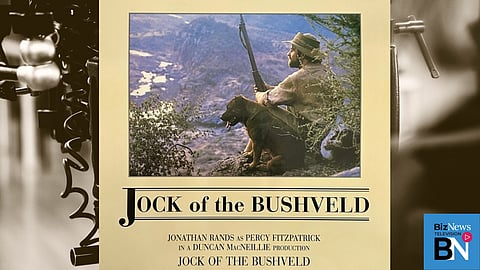
Jock of the Bushveld returns: AI brings a South African classic back to life
Jock of the Bushveld, the classic story of how the runt of the litter became the trusted, gutsy companion of Sir Percy FitzPatrick during South Africa’s goldmining era, is one of the country’s most enduring stories. The book once outsold the Bible locally and was adapted into a feature film by producer Duncan MacNeillie, released in 1986. Now, a new generation will be able to see the film, which is being upscaled in 4K with the help of AI. In an interview with BizNews, MacNeillie said his original master copy of the film was destroyed and that, for years, he tried unsuccessfully to upgrade the film, which enjoyed one of the longest theatrical runs in SterKinekor’s history. Financially, the theme song, Spirit of the Great Heart, became Johnny Clegg’s most successful song. With recent advances in AI, MacNeillie is now able to restore and rerelease the film for a new generation. While Disney showed interest at the time, the film was blocked internationally because of apartheid. This beloved story will now be available first to South African audiences and then worldwide. – Linda van Tilburg
Sign up for your early morning brew of the BizNews Insider to keep you up to speed with the content that matters. The newsletter will land in your inbox every morning on weekdays. Register here.
Support South Africa's bastion of independent journalism, offering balanced insights on investments, business, and the political economy, by joining BizNews Premium. Register here.
If you prefer WhatsApp for updates, sign up to the BizNews channel here.
Watch here
Listen here
Edited transcript of the interview
Linda van Tilburg (00:00):
Jock of the Bushveld, the classic tale by Percy FitzPatrick, is a story many South Africans grew up with. It follows FitzPatrick’s journey to the old Transvaal goldfields and the bond he forms with a puppy named Jock. The book was adapted into a feature film in 1986, produced by Duncan MacNeillie. Duncan is now revisiting the film in a completely new way, using AI to reimagine and restore this beloved story for a new generation. He joins us in the studio today.
But before we start talking, Duncan, I think we need to take a look at a clip from the reworked version.
Linda van Tilburg (01:33):
Duncan, this is so fascinating. It’s so clear. So instead of reshooting the film, you chose to recreate it using AI. What sparked that decision?
Duncan MacNeillie (01:47):
The decision was sparked by the fact that my original master copy was destroyed. What was available, the best I had, was not up to standard. For years I tried tests, looking at upgrading and upscaling and all the rest, and nothing really worked. But with AI, and the team I’m working with in Johannesburg, we’ve managed to deal with the latest technology. It changes all the time, but we’ve produced something that really looks good. So now we just need to press ahead.
Linda van Tilburg (02:12):
What are the biggest technical or creative challenges in using AI?
Duncan MacNeillie:
I think, as a rule, one considers AI as having a slightly plasticky kind of look, and a lot of people feel they can pick it up. But with this process, it really maintains the original look and feel. It does justice to the original and doesn’t feel like a recreation. It just looks like the original.
Linda van Tilburg (03:02):
You mentioned the condition of the film and that you had lost the original. So how much restoration was needed before AI could even be applied?
Duncan MacNeillie (03:13):
What you have to do is blow the image up in the best quality that you can, and then AI takes over. But it’s not as simple as a lot of people imagine, where you just click a button and it performs. There’s a certain amount of correction and grading, and there are issues that come up. So you have to make sure that when you deliver it, it’s up to the standard that the platforms now request.
Linda van Tilburg (03:58):
So how long has this reworking process taken?
Duncan MacNeillie (03:59):
For the last year and a half I’ve been discussing it with a friend who worked with me on the animated Jock, Tiaan Franken. He’s now joined Rob at The Chocolate Tribe studio in Johannesburg. Initially he said to me, “Look, wait a year.” I waited, and when we revisited it, the technology had already advanced again. It’s moving at such a rate that what we’re doing now will probably be made easier in a few months’ time. I think we’ve reached the point where we need to say, let’s press ahead and do it.
Linda van Tilburg (04:44):
And is it completed?
Duncan MacNeillie (04:46):
No, no, we’ve just run a test. My daughter Christie, who’s working with me, has done an edit, just a oneminute edit for testing. That’s laid to the original song which Johnny Clegg wrote for me, Spirit of the Great Heart.
When I finished the film, I knew I had a good film. It was a small budget in those days, in today’s terms it would still be extremely small. I met with Johnny and asked how much he would need. He told me, I went out and raised the money, and then we signed a deal and went ahead with the music. It was great to work with him. Over the years I worked a lot with Johnny.
Linda van Tilburg (05:50):
So do you have a sense of when it might be released?
Duncan MacNeillie (05:57):
We’re hoping to have it ready by the end of the year. I’m planning to meet with agents and distributors when I’m in South Africa in June or July. As soon as the tests are ready and the picture is complete, we’ll be in a position to discuss distribution.
Linda van Tilburg (06:18):
What about funding? Have you received some backing for it?
Duncan MacNeillie (06:22):
We’re looking for funding at the moment. Thanks to a special deal from The Chocolate Tribe, they’re offering an amazing price. In their view, it’s about bringing this classic back to life, and I really appreciate their input.
Linda van Tilburg (06:50):
How do you think audiences will respond? Does the story still resonate today?
Duncan MacNeillie (06:56):
When it first came out, it was a great success. It was a time when South African product was effectively banned internationally because of apartheid. Disney showed interest. I flew to London and met with them; they said they liked it. We then drove to LA, and long story short, they didn’t really want anything to do with a South African product, quite rightly at the time, I suppose. So it was effectively blocked internationally and had very little exposure outside South Africa.
When I first discussed making the film, I met with Desmond Niven. He was a wonderful person and very supportive, but he was almost dismissive because he believed there had been six previous attempts to make it. When it finally worked, he, like all of us, was very excited that we’d managed to complete it and make something good. He also launched a new edition of the book at the time, almost like a collector’s item. The book went from virtually nothing to being the biggest seller after the Bible in South Africa. So now, hopefully, this works again and it picks up new momentum.
Linda van Tilburg (08:53):
Did you have to adjust the language or tone because those were different times?
Duncan MacNeillie (08:56):
Yes, they were. It’s a period picture, and there’s sensitivity around certain language, obviously, but we’ve taken care of that. You have to be careful not to lose the authenticity of the time and the period and the way things were. I believe it’s important to maintain that without offending anyone.
Linda van Tilburg (09:34):
And how would you release it? Would it be on Netflix or the big screen?
Duncan MacNeillie (09:39):
Netflix would be a great choice, or any of the major platforms, Amazon, for example. We’ll wait and see which of the big studios show interest.
Linda van Tilburg (09:53):
So without giving anything away for people, maybe a younger generation who might not have read the book or seen the film, does the ending remain the same? Because it’s quite sad.
Duncan MacNeillie (10:03):
Yes, it does. I remember watching a cricket match once with the Northern Transvaal rugby side sitting behind us. This big guy tapped me on the shoulder and said, “You made me cry.” I was shocked, I didn’t know what he meant until someone explained it was about the film.
Even big, tough guys were moved by it. A lot of parents found themselves crying. At the end of the day, it’s a story about a loving relationship between a man and his dog, and we’ve kept that. It was important to do so. It’s always good to shed tears in films when the time is right, but overall, it’s a story of hope and courage.
Linda van Tilburg (11:03):
How do you protect copyright on this? I’ve actually seen short clips of the original film on YouTube.
Duncan MacNeillie (11:12):
We’re busy dealing with that right now. It happened once before, and it’s cropped up again. One of the main reasons is that the quality of what’s out there is very poor. I’m finalising that cleanup with YouTube at the moment, and it should be taken down very soon.
Linda van Tilburg (11:35):
Are you going to release it in South Africa first?
Duncan MacNeillie (11:47):
Yes, I think so. According to SterKinekor, which released it originally, it was one of their longestrunning films. Over the years, it’s remained one of their longestrunning successes, according to a previous head of the company. Hopefully, we can revive that. I believe the interest is still there for another generation.
Linda van Tilburg (12:20):
That generation also has a nostalgia for the past, which might work in your favour.
Duncan MacNeillie (12:29):
Yes, I think so. When I made the film, the boycott of South African product was always at the back of my mind. But I felt that if it was made well and the story was authentic, then, as a period film, it had a chance to be revived. It’s been a long time, but hopefully this will be that opportunity.
Linda van Tilburg (12:56):
Is the book still being sold and prescribed by schools?
Duncan MacNeillie (13:01):
Yes, it is. Like anything, good marketing helps increase sales. It’s a wonderful book and it’s stood the test of time, but many classics can easily be lost on shelves. Hopefully, this will give it a bit of a revival.
Linda van Tilburg (13:23):
And maybe a revival of the song as well?
Duncan MacNeillie (13:34):
Yes. It was an amazing song, Spirit of the Great Heart. Johnny Clegg wrote it, and it became almost like a second anthem for many people. Johnny once told me it was the most successful song he’d ever written financially, so it would be wonderful to see that revived too.
Linda van Tilburg (14:18):
Who is Duncan MacNeillie? Tell us a bit about your background.
Duncan MacNeillie (14:25):
I grew up on a farm in Zululand and spoke Zulu almost as fluently as English. My parents loved the Zulu people, and that had a big influence on my life. Through my father, I met Ian Player; my dad was chairman of the Wildlife Society in Zululand. Ian later became a good friend and mentor, especially in terms of conservation, which is a real passion of mine.
My first films were made with Ian, documentaries and commercials, and when it came to making Jock, Standard Bank was my main financier. At the time, Etienne de Villiers had just been appointed by Sol Kerzner to represent the film industry. The bank initially pulled the plug, saying I was a firsttime filmmaker. Ironically, Etienne later went on to head Disney in London.
Thanks to Ian Player, the decision was reversed, the money stayed in place, and we made the film. It was a great start to my career.
Linda van Tilburg (17:20):
Apart from this movie, what else are you doing now?
Duncan MacNeillie (17:22):
I’m writing a book on the AngloZulu War. It focuses on the relationship between John Dunn, an EnglishScottish man, and King Cetshwayo. It’s a story that was encouraged by Ian Player for many years.
I originally wrote it as a screenplay, but after attending a screenwriters’ conference in London, it became clear that a book might be a better starting point. With my daughter Kirsty encouraging me, she’s very good, we’re working on it together. Hopefully, by the end of the year, around the time this film is released, the book will be ready as well.
Linda van Tilburg (19:50):
And what is the book called?
Duncan MacNeillie (19:54):
The working title at this stage is The White Zulu. Johnny Clegg was often referred to as “The White Zulu”, but in this case, the description is literal. John Dunn crossed the Tugela into Zululand and never looked back. The relationship he had with Cetshwayo was later split by the war, but it’s a powerful story with great pace and historical depth.
