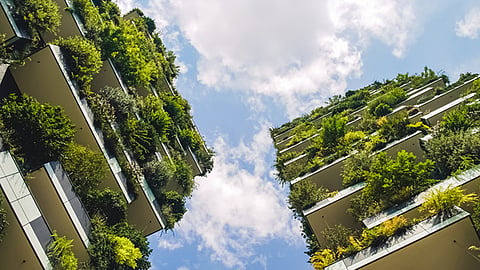
Key topics:Debate: Are skyscrapers vanity projects or sustainable urban solutions?New designs integrate greenery, energy efficiency and walkable density.Questioning megaprojects like NEOM versus “Goldilocks” urban density..Sign up for your early morning brew of the BizNews Insider to keep you up to speed with the content that matters. The newsletter will land in your inbox every morning on weekdays. Register here.Support South Africa's bastion of independent journalism, offering balanced insights on investments, business, and the political economy, by joining BizNews Premium. Register here.If you prefer WhatsApp for updates, sign up to the BizNews channel here..By Carlos Amato.Very tall buildings have long been dismissed by clever people as vain or foolish projects. For one thing, supertalls are murderously expensive per square metre of floor space built. Hence, they prioritise form over function, razzle over reason. As phallic projections of political, national or corporate pride, they send the same visual message the Egyptian pyramids once did: “Behold the importance, wealth and immortality of the big man that ordered this big thing.”Or, to twist the words of Shelley's Ozymandias: “Look on my works, ye not-so-mighty, and despair.”But is that all still true? Many architecture and urban geography wonks beg to differ. For over a decade now, the feeling is growing that in an age of climate crisis and relentless urban sprawl – in which every carbon-powered horizontal commute is a small blow struck against our atmosphere – the density and energy efficiency of high-rise buildings is suddenly a force for good. Sustainability and urban social fabric are both strengthened if workplace and residential towers are close enough for one to walk or cycle between them. So the post-Covid trend is to convert into flats all the office towers that were emptied or half-emptied by the remote work revolution.High-rise densification builds community bonds, the new consensus goes. It also makes public transport nodes and other public services – from libraries to museums to parks – more viable and effective. But the trick is to make these new-school towers more humane in their design. Instead of behaving like giant walls that shut out the street and shut in the residents or workers, the new towers need to embrace the street and surrounding green spaces.Easier said than done – and starchitects can sometimes demonstrate more creativity in their theoretical waffle about their buildings than they do in the buildings themselves. Even so, a wave of sexily sustainable skyscrapers is backing up the tall-is-good thesis.These days, skyscrapers can be literally green – witness the 193-metre Oasia Hotel Downtown, Singapore, designed by Singaporean firm WOHA and opened in 2016. The hotel's entire red exterior is encrusted with an ever-growing 60-floor vertical forest of tropical vegetation. The interior is opened up by four vaulting “sky gardens”, which serve to create natural air conditioning, thus drastically cutting energy use. The Oasia replaced a park, but is itself a much bigger park, boasting ten times the old park's green surface area. And 18 species of wildlife have moved into its gobsmacking garden.Another expert combination of sustainability and spectacle, if not height, is the late, great British-Iraqi starchitect Zaha Hadid's last building: the headquarters of waste management company Beeah in Sharjah, United Arab Emirates, which opened this year..The Beeah building is a sprawling 9 000 square-metre complex, equipped with solar power systems that supply 40% of its power use. Its sinuous forms echo the surrounding Sharjah desert dunes: the undulating roof's vast slope of glass serves to suffuse the interior with natural light, which saves a significant amount of energy. The building's infrastructure incorporates an advanced AI system that will learn on the job how to refine and improve its sustainability.Meanwhile, a few million dunes to the northwest of Sharjah, a vastly more ambitious and grandiose high-rise dream has been pencilled onto the desert sand. Saudi Arabia's Neom concept is a blueprint centred around a linear city called The Line. If it is built, it will be 170 kilometres long and 200 metres wide. You might call it a desertscraper, but the goal is to host a carless, utopian metropolis of nine million residents in a constellation of walkable communities all packed into an insanely long continuous building encased in a mirror-glass exterior.It's not controversial to say that Neom is an insane idea. But if anyone wields the material power to realise it, then its political champion does: Saudi Arabia's aggressively reformist Prime Minister and Crown Prince Mohammed bin Salman, whose stated project is to diversify, industrialise and decarbonise his kingdom's oil economy.Can a fossil-fuelled autocrat really do right by the planet with a horizontal building so unimaginably huge that is also a megacity? Where will the 9 million residents come from, and will they ever want to step outside for a bit? Will bin Salman eventually wind up as a tragicomic latter-day Ozymandias: “Look on my works, ye not-so-mighty, and get some air?”It's probably not fair to judge the green case for skyscrapers by linking it to the sheer hubris of the Neom plan. Every good idea has its loony outliers.But spectacle can be seductive, and the sustainability world is far from immune to that seduction. It's worth quoting an argument for optimal density made nine years ago in the Guardian by Treehugger's Lloyd Alter: “There is no question that high urban densities are important, but the question is how high, and in what form. There is what I have called the Goldilocks density: dense enough to support vibrant main streets with retail and services for local needs, but not so high that people can't take the stairs in a pinch. Dense enough to support bike and transit infrastructure, but not so dense as to need subways and huge underground parking garages. Dense enough to build a sense of community, but not so dense as to have everyone slip into anonymity.”Alter also points out that older four-storey districts of Paris, Montreal and Barcelona are much more densely populated than New York as a whole, because the flats and shops and streets are all smaller. And if you are looking for extreme density, you won't find it in the glamorous glass jungles of Manhattan or Tokyo: you will find it in the teeming, towerless residential districts of Mumbai, Lagos, Karachi or Bogotá.In short, sustainability doesn't have to be flash. Sustainability can be messy, chaotic and cramped.Even so, if the world of the flash produces less trash, we're all better off.