
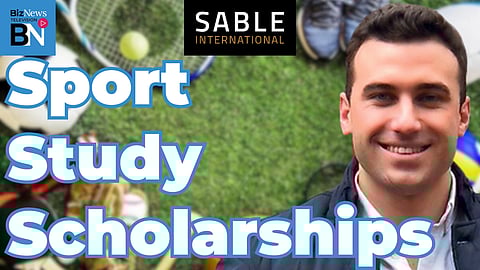
Trump’s $100,000 H-1B fee hasn’t shut the door on SA sport talent
The Trump administration’s $100,000 fee on new H-1B visas that came into effect in September has raised fears that it has shut the door on South African students who dream of following the path from American university sports scholarships to post-graduation jobs. However, Tyler Hollingsworth from Sable International says that, according to the latest clarifications from US authorities, students who complete their degrees in the US and transition from a student visa to an H-1B are exempt from the new levy. In this interview with BizNews, Hollingsworth says 2025 has been the agency’s busiest year yet for placing South African sporting talent. He also tackles the perception that only provincial or Springbok-level players qualify for scholarships and urges students to plan as early as Grade 9 or 10 if they want the best shot at the top universities. And with the Springboks’ dominance in rugby, he says European universities are now actively trying to lure young talent with free education – and possibly a future cap for their own national sides.
Sign up for your early morning brew of the BizNews Insider to keep you up to speed with the content that matters. The newsletter will land in your inbox at 5:30am weekdays. Register here.
Support South Africa’s bastion of independent journalism, offering balanced insights on investments, business, and the political economy, by joining BizNews Premium. Register here.
If you prefer WhatsApp for updates, sign up to the BizNews channel here.
Watch here
Listen here
Edited transcript of the interview
Linda van Tilburg (00:00)
If you are a talented sports person, the world’s leading universities let you chase your sporting dream while earning a world-class degree. Well, immigration specialists Sable International have already placed hundreds of these talented South Africans abroad. In the studio we have Tyler Hollingsworth to unpack how global sport and education intersect. Hi Tyler, so nice to see you again.
Tyler (00:38)
So nice to see you too.
Linda van Tilburg (00:40)
Well, college sport is now such a multi-billion-dollar business. How does this create openings for South African talent?
Tyler (00:58)
South Africans – we are a super-talented nation. We love our sport and the climate absolutely suits it. But we’ve got incredible students too. So what Sable does is it marries those two aspirations together, and we make sure that very talented students who want to continue playing their sport can.
And what’s really great about what we do is that, you know, the perception is you have to be an elite athlete or you have to be provincial or national level. You don’t. You just have to have a passion for it and we can place you at an international university.
So the majority of our kids that are at a very high level go to the USA on these full scholarships, but you can get partial scholarships, academic scholarships and diversity scholarships. I know with Trump at the moment there’s a lot of talk about minimising that diversity side, but from our perspective we’re still seeing a lot of institutions give out pretty sizeable diversity scholarships. So it’s not just the sport or the academics – it’s really the whole package.
And then UK universities are also very popular with their sports programmes, so we’re placing a lot more into the UK now. We’ve got partnerships with places like Glasgow and Bath with the rugby, and the sports are very, very good. So it’s no longer just to America – it’s very global.
Linda van Tilburg (02:25)
So does it change from year to year? Can you sort of say, “Well, this year they’re going for that talent or they’re looking for this”?
Tyler (02:34)
No, no, it’s really on the crop of talent that we’re able to identify. So we do a lot of on-the-ground recruiting. We’ve got partners and coaches and schools and clubs that we partner up with that are often our eyes and ears on the ground, and they will recommend Sable to their talented athletes.
But it’s just really the talent that comes in that year. And we do a lot of clinics; we host rugby camps and hockey ID camps. We’ve actually got a football ID camp in January where a whole bunch of universities are flying out. So it doesn’t really switch per year – it’s really just the talent pool that enters our programme.
Linda van Tilburg (03:10)
So the universities fly over to South Africa to come and look for talent?
Tyler (03:15)
Absolutely, absolutely. A lot of them. So universities like Arizona, Loughborough, University of York, Gannon University – we’ve got about 12 universities flying out in January. And then earlier in 2025 we brought out Loughborough, we brought out Glasgow; we did – I’m not going to name the schools now – but some very prominent rugby schools. We met up with their coaches and their directors of rugby too. South African rugby at the moment is just unstoppable, so these European countries are hoping to get them young and potentially give them a free education and possibly play for those nations. But we hope they don’t – we hope they play for the Springboks, obviously.
Linda van Tilburg (03:58)
Can we dive a bit more into the US? Because people thought that door might have closed a little bit.
Tyler (04:05)
The situation with Trump is a little bit tricky at the moment – and obviously there’s a lot of people that sit on both sides of the aisle that are probably watching this – but America is still open for international education. The coaches and the athletic departments are still looking for the best talent and the best students that they can find. And we’re here to help you, whether it’s a conservative or a liberal institution or an academic or a sports institution, rural, city – our agency caters for all different shapes and sizes, religious beliefs; we’ve got Jewish universities that are our partners.
You know, America is a big place and I think what we see in the news is obviously headline stuff. The day-to-day experience of the average international student on the ground is wonderful. Linda, I know you’ve probably travelled to the States – the Americans are wonderful people and I think they get quite a bad rap and a lot of people do play politics, but it’s still very much open for business. This year has been our biggest year yet. We’ve been doing this for about 10 years. We’ve sent the most amount of students to the USA that we’ve ever done. So we are picking up that there is a lot of pushback and a lot of anxiety, but that’s all it is. It’s a lot of fear that’s out there, but the reality is we’ve never been busier.
Linda van Tilburg (05:45)
So how successful have you been so far in placing students?
Tyler (05:50)
We’ve got a 100% placement record, and that means that every student that we bring in we’re able to get them an offer or an acceptance into an American or European institution. That doesn’t always mean you’re going to go to your dream institution. Obviously every child has an understanding of the ranking systems and the brands, and there are some big brands and some small brands and some unknown brands. And you may want to go to a place like Yale or Stanford or Ohio State or Penn State, but if your talent and your academics aren’t there, you’re not going to get in. So what we do is we try and bring that student in quite early. And we have what we call academic and athletic advisers who guide and develop those portfolios, help those students reach the levels that they need to.
The biggest problem that we face as an agency – we could send more, we could probably send about 500 students a year. It’s just that in the South African understanding people only come to us in matric or at the end of Grade 11, and that’s for a South African student completely normal. But we actually need them earlier to get them on the right pathway to get into those institutions.
So yes, we’ve got kids at Dartmouth, at Princeton; we’re talking to UCLA; we’ve got students at UCLA – you name it, we’ve dealt with the big brand names. But to be honest with you, not very many of our students go to those types of institutions. The vast majority go to small private colleges that are better suited to their abilities and their needs. Not everyone gets to go to Harvard, for example, but we do have athletes at those types of schools.
Linda van Tilburg (07:35)
So apart from your advice that you should start earlier, take us through the steps a parent should take with their child, because it would be very hard for you to do it on your own.
Tyler (07:47)
It is hard. The elite athletes are always going to be seen, right? If you’re Bayanda Walaza and you go to the Olympics and you’re in matric, you’re going to get seen and those coaches are going to find you somehow and give you a full scholarship.
The athletes that we deal with the majority of the time are maybe the sub-elites. They’re still very, very good – maybe the best at their school or the best in their province – that aren’t getting that attention from these international institutions. They come to us and then we build that portfolio.
And we need them to start thinking about this from about Grade 10. That is the ideal time. For most South Africans that’s too early, but the reality is the window opens for scholarships to start to be given to students from the middle of a student’s Grade 11 year. Most South Africans aren’t even thinking about it then.
So the rest of the world is almost a year ahead of South Africans. And then when we get to matric we wonder why we’re not getting into our dream universities – just because we’re starting too late. If studying abroad and playing sport is really what you want to do, we almost need to rewire our brains and think a little bit differently, because the requirements and the portfolios – and not only the sports requirements, there’s a whole academic component that you need to understand.
American institutions look at Grades 9, 10, 11 and 12 – not just end-of-year Grade 11 or matric. It’s your whole high-school career. So guiding and counselling and helping students get through that effectively happens from the beginning of Grade 10, unfortunately. So if you are in matric, obviously we can still help you. But if you’re in Grade 9 or Grade 10, reach out to us so that we can start this process as soon as possible.
Linda van Tilburg (09:55)
South Africa has really talented athletes and I think they often think only of their sporting career. Is it important to think not only of your sporting career but also what might come afterwards, and that is why what you are offering – to go and do it at a university and study while you become really good at your sport – is that a good idea to follow that path?
Tyler (10:18)
Yeah, absolutely. I think it’s critical. I think that’s really… it comes, at the end of the day it all comes down to getting an education. The reality is for the vast majority of people you’re never going to play professional sports. And for those that do, a year, maybe two years is an incredibly long career. If you get that privilege to play professional sports you might make some money – generally very little unless you’re a superstar, unless you’re an Eben Etzebeth or a Bryan Habana; you’re going to make generational wealth with that and then you can use that stardom to build a platform off of. But there are guys that have played for the Springboks – five, ten caps – that you will never remember, and they’ve got normal jobs. They then have to finish their careers and go back to university and they’re almost starting on the back foot. So for us we always want to put academics at the forefront of that.
Students need to go get an education, and then once you’ve got that education you can go professional, right? But you’ve always got something to fall back on. And there’s nothing like a student-athlete in the corporate environment. If you look at Google, if you look at Apple, if you look at their hiring policies, they will always choose a student-athlete before a regular person because of the discipline and the regimented lifestyle that you have to put into being able to compete at an elite college level.
If you play in college sports you’re essentially a professional athlete that’s also a student – 50-50. It’s flat-out sports and it’s flat-out academics, and if you fall back in your academics the athletes actually get stopped from playing – you get banned. For me, I love hiring athletes because they’re just so driven and they’re so structured; to perform at that level you’ve got to have such an organised, routine life, and it works out. So to answer your question: yes, it’s critically important that you’re able to get an education.
Linda van Tilburg (12:15)
And I think we’ve discussed this before: don’t start getting good marks towards matric, don’t hockey-stick in matric – get the good marks early to enable you to do this.
Tyler (12:26)
Yeah, especially in the USA. I think it’s very rarely understood that you need to start in Grade 9, because from a South African, even a UK perspective, people only really push in their A-levels or their GCSEs. For America you have to push from Grade 9. Your Year 9, wherever in the world you might be watching this from, is Year 9. American universities look at every single year accumulatively. So your Grade 9 and your Grade 12 are exactly the same. So yeah, get on that bus nice and early.
Linda van Tilburg (13:55) So these recent increases in the H-1B employment visa – is that putting people off? I’m talking about the US now.
Tyler (14:13) Ja, absolutely. It’s definitely scared a lot of our parents away from considering the United States, but there’s been some recent clarification from USCIS and the Department of Homeland Security.
Any new H-1B employment visa applicant will have to pay $100,000 – or the company will have to pay that – towards the government to bring in outside employment. Obviously America wants to be “America first” – we’ve all seen this in the news. However, for students that transition from a student visa to an H-1B employment visa, they don’t have to pay that exorbitant fee. So for all of the parents – and I get phone calls, I’ve had many chats about this – students don’t have to pay that fee, so everyone can relax about that. Thank goodness.
Linda van Tilburg (15:00) That’s probably put some people off from actually applying to the US.
Tyler (15:04) Yeah, I think it absolutely does. I think the confusion in the media and the optics that is pushed by news outlets is very negative to the States, but recent clarifications have confirmed our suspicions for a very long time, because we’ve had students that have graduated and now have jobs during this whole period and they’ve sailed through it with very little issues.
One student did have issues when the clarity wasn’t there – when they landed back to start. So they obviously came home for the holidays and they were starting a new job. At the airport they did get questioned, but he got through and now he’s working in New York at some fancy bank. But that’s why we’re talking on BizNews – to clarify for those parents who may be very scared by this: your children will be able to get jobs once they graduate. That’s obviously a huge relief for us.
Linda van Tilburg (16:25) Okay, so do you find that people try to do these incredibly difficult things on their own, or do they come to people like you?
Tyler (16:43) Yeah, absolutely. We are a service-type business, so you can do this by yourself – it’s obviously just quite a tricky process to follow by yourself. So what we find is that a lot of parents will start this, they’ll become overwhelmed, they won’t understand what an NCAA or an SAT or – you know, there’s acronyms that I could list for days – which often overwhelm people. And then they come to us and we’re able to sort it out very, very quickly. So if you are interested in reaching out to Sable International, you can obviously just Google us – “Sable International Sports” – and our wonderful success coaches and study advisors will be able to guide you seamlessly through this process.
Linda van Tilburg (17:20) Tyler Hollingsworth, thank you so much.