
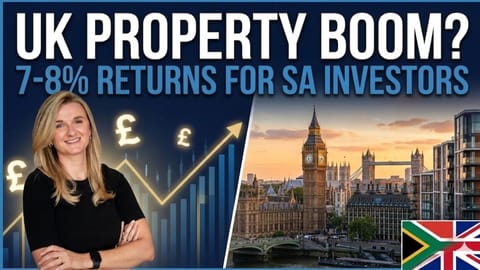
Why UK property still appeals to SAns: undersupply, 7–8% net yields, low rates – Mikayla Morkel-Brink
The United Kingdom remains a stable and attractive property investment destination for South Africans, says Mikayla Morkel-Brink from immigration specialists Sable International. She explained in an interview with BizNews that rental demand is driven by a chronic undersupply of housing and consistently high tenant demand. For South Africans, the appeal is reinforced by realistic net yields of 7–8% and mortgage rates of around 4–5%, far lower than in South Africa. Asked whether the upcoming Renters’ Rights Act will affect landlords, Morkel-Brink says the shift toward more open-ended leases, rather than fixed 12month contracts, is unlikely to have a significant impact in the regional university cities such as Leeds and Birmingham where Sable operates. The company is also highlighting new opportunities in Reading, a regeneration hotspot on the Thames within easy reach of London. – Linda van Tilburg
Sign up for your early morning brew of the BizNews Insider to keep you up to speed with the content that matters. The newsletter will land in your inbox every morning on weekdays. Register here.
Support South Africa's bastion of independent journalism, offering balanced insights on investments, business, and the political economy, by joining BizNews Premium. Register here.
If you prefer WhatsApp for updates, sign up to the BizNews channel here.
Watch here
Listen here
Edited transcript of the interview
Linda van Tilburg (00:45)
I’m joined in the studio today by Mikala MorkelBrink from Immigration Specialist Sable International. We’re taking a closer look at offshore real estate and investment opportunities for South Africans, with a particular focus on the United Kingdom. Mikhayla, welcome to BizNews.
Mikhayla MorkelBrink (01:01)
Hi Linda, thank you so much for having me. Great to speak with you.
Linda van Tilburg (01:06)
So, is the UK still considered to be a strong and stable property market?
Mikhayla MorkelBrink (01:11)
Yes, it is. Sable has focused on UK property for the last decade now. As South Africans, we were very happy to see the positivity in South Africa right now, so we’re encouraged by that. Being a global company, we want to advise our clients with that global reach, and we feel UK property remains an extremely resilient market. Over the last 15 years the graph has continued to remain stable and to grow. Recent reports from Savills and JLL are predicting around 25% growth over the next five years, so we’re still very encouraged. It’s a strong product offering and we very much believe in UK property.
Linda van Tilburg (02:05)
What are the key factors that keep the UK such a resilient investment destination?
Mikhayla MorkelBrink (02:11)
The biggest thing at the moment is the lack of supply. The UK government has promised to build 300,000 homes per year but they’re only managing around 70,000. This undersupply, coupled with extreme demand driven by immigration, has shifted the market. There’s virtually no void periods for the properties we’ve been dealing with. That underpins a very strong market. Investors can go in at about £200,000, put a tenant in, and achieve six to seven percent net yield. Based on the undersupply, it’s going to take a very long time for the market to reach any kind of oversupply.
Linda van Tilburg (03:25)
You mentioned £200,000. Are UK mortgages accessible to South African investors, and what do lenders typically require?
Mikhayla MorkelBrink (03:35)
This is something a lot of South Africans aren’t aware of — the ease with which you can acquire a UK mortgage. There’s no restriction on UK investment, and you can get a mortgage. Lenders typically offer 60 to 75% loantovalue. Sable has its own mortgage advisory team in our London office, so they can assist. A South African investor can put down a 20% deposit and get 75% financing.
Mikhayla MorkelBrink (04:30)
What’s interesting is that the rental income will often cover the majority, if not all, of the mortgage repayment. UK interest rates for foreigners are around 4–5%, compared to South Africa’s prime rate of about 10.25%. It’s much more affordable, which surprises a lot of investors. That’s why the rental can almost cover the entire mortgage.
Linda van Tilburg (05:19)
When you invest, what returns and costs should investors realistically expect?
Mikhayla MorkelBrink (05:34)
We’re very specific with the developments we recommend. We’re not a real estate agency or project promoter — we really look at the numbers and stay conservative with rental yields. You’ll often see claims of 13, 14 or 15 percent, but we provide full cash flows and a breakdown of every cost: service charges, mortgage repayments, solicitor fees, and so on. In the regional cities we focus on — Leeds, Derby, Birmingham, Manchester — we currently have projects delivering 7% to 8% net yield, which is excellent, especially when compared with what’s possible in Cape Town given our high prime rate.
Linda van Tilburg (07:13)
A new Renters’ Rights Act comes into effect in May. How will these changes affect South Africans who own property and want to let it out, or new investors entering the market?
Mikhayla MorkelBrink (07:26)
The biggest change is that contracts are now more openended rather than fixed for 12 months. Investors would prefer certainty of a fixed term, but we don’t see this as a major issue in the regional cities we work in. Demand is so high and void periods so low that if a tenant leaves, you can usually find another very quickly. We don’t believe it will significantly affect the investment or the UK property market at this stage.
Linda van Tilburg (08:37)
What is the quality of your tenant pool? Are a lot of them students?
Mikhayla MorkelBrink (08:42)
In studentfocused cities, yes, but about 80% of our tenant pool are young professionals — highly qualified people who can no longer afford or don’t want to live in central London because of the cost of living. That’s why we focus on regional cities. For example, in Leeds there’s been huge regeneration, with big employers like PwC, Deloitte and KPMG moving offices out of London. The tenant pool moves with them.
Mikhayla MorkelBrink (09:35)
Similarly, Reading is another city we’re focusing on. It’s beautiful, and you can be in central London in 23 minutes. It has some students from the University of Reading, but it’s more affluent tenants, often parents wanting a safe, secure property for their children.
Linda van Tilburg (10:30)
Are you also looking further south, in areas south of London?
Mikhayla MorkelBrink (10:35)
Not as a primary focus. Our main core is the investment portfolio. We do have a relocation arm in London and good relationships with agents for secondary homes, but our bigger investment cases are further north where rental yields are higher and entry points are easier for South Africans. They’d rather invest £250,000 in Birmingham and maximise rental yield than spend £750,000+ on a onebedroom in London.
Linda van Tilburg (11:39)
What is the most common mistake South Africans make when making these investments?
Mikhayla MorkelBrink (11:45)
Buying property in another country from South Africa can be daunting with so much information coming at you. Be very wary of inflated promises — if someone offers 13–15% rental yield, it’s probably not realistic. We stay extremely conservative. Another big issue is not looking at all the costs: service charges, management fees, mortgage costs, etc. It’s important to see the full picture and understand this is a longterm investment, not a quick fix.
Mikhayla MorkelBrink (12:53)
It can also become overwhelming dealing with multiple parties — mortgage advisors, tax specialists, property finders — all saying different things. That’s something to be cautious about.
Linda van Tilburg (13:35)
How do estate agent fees in the UK compare to South Africa?
Mikhayla MorkelBrink (13:42)
It works similarly in that the seller or developer usually pays the commission. As the client, you don’t pay the estate agent or us any fee. The developer pays their agent directly. Sable is independent — we’re not tied to any specific developer. We act as advisors. The percentage varies, often around 4–5%, but it doesn’t affect what the client ultimately pays.
Linda van Tilburg (14:43)
Who is this type of investment best suited for?
Mikhayla MorkelBrink (14:48)
I’d say investors with between £150,000 and £200,000 who want offshore exposure, to hedge against the rand, and to earn rental income in pounds. Many parents with children in high school buy in the UK as a nest egg for when their kids go to study there. We work closely with our study abroad team on that. It also suits investors looking for global exposure in general.
Linda van Tilburg (15:58)
Mikhayla, is there anything you think we should have added? I’ve covered quite a broad range.
Mikhayla MorkelBrink (16:05)
I’d just advise investors to make sure they have all the information, do their homework, and not feel rushed into any purchase. There’s been a big push with new projects lately, but take your time. Have all the figures in front of you, know exactly what you’ll be spending and what your yields will be, and remember it’s a longterm investment. Sable can help with the whole process under one roof — forex, tax structuring in both countries, property sourcing, and more.
Mikhayla MorkelBrink (17:04)
If anyone would like to discuss it, I’m always available.
