How to call the bottom: Five great tips for stock market bargain hunters
Analysts are paid huge sums to read the patterns in stock markets; often computers do the job just as well, if not better. There are juicy rewards for investors who can buy stocks that have had their values unfairly pummelled on exchanges, because there is the opportunity to make huge gains when the tsunami waves washing through the system subside. In this fascinating series of graphs, Bloomberg analysts point to five points to help you decide whether now is an appropriate time to start picking up shares for your portfolio. Many professional investors are too nervous to buy, fearing that the full effects of the pandemic have not yet registered in emerging markets. But, when they are ready, they will move faster and more effectively than the small investor. This is underscored by the observation that during the global financial crisis, the MSCI World Index rebounded from its low even though the world economy was still contracting rapidly. It's worth remembering one of investment guru Warren Buffett's most famous pearls of investment wisdom, and that is to be greedy when others are fearful. – Jackie Cameron
Five 'Ps' that will help determine if the market has bottomed
By Simon Flint and Matt Turner
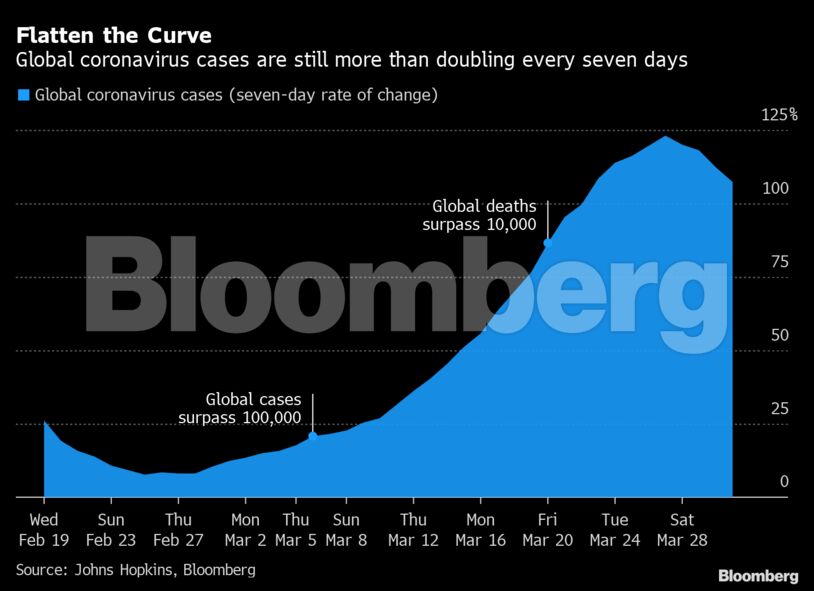
(Bloomberg) – Bulls and bears remain at loggerheads about whether risk assets have hit a bottom. The following five "Ps" may provide an answer: pandemic, production, policies, positioning and prices.
Investors have fled emerging markets in record numbers since the outbreak of the coronavirus, even though central banks and governments have piled on stimulus to counter the impact of the deadly pathogen. While strategists at companies such as JPMorgan Chase & Co. have concluded that most risk assets have seen their low points, others at firms like Deutsche Bank AG say it's too early to sound the all-clear.
The following charts may give an insight into the elusive turning point: